


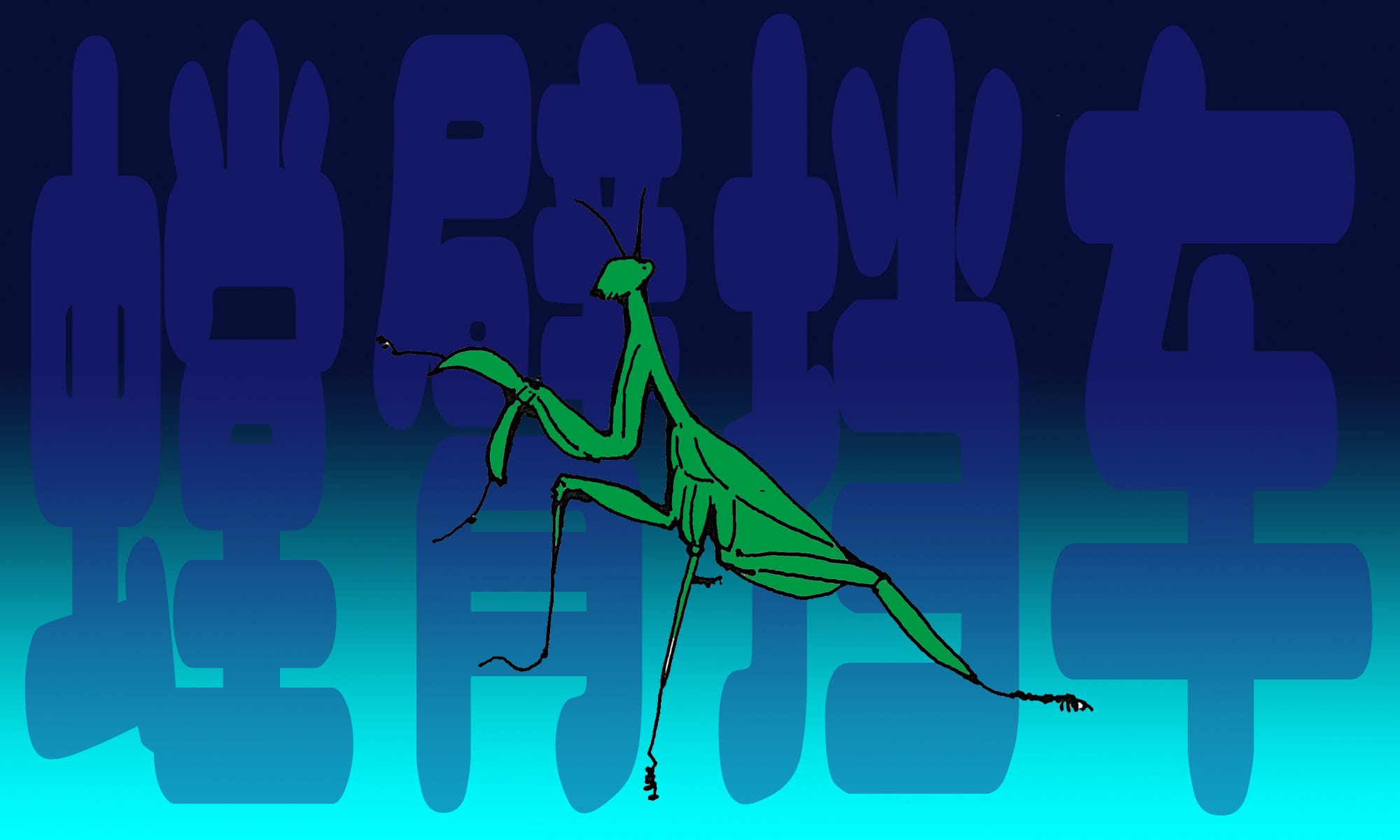
Our phrase of the week is: “a mantis trying to stop a chariot” (螳臂当车 táng bì dāng chē)
Context
Rumours that iFlytek (科大讯飞) and NetEase (网易) — two of China’s biggest tech companies — are planning large-scale layoffs have been circulating on social media since the middle of March.
Both companies have denied the rumours. But nonetheless the news has hit a nerve with many people who work in the tech sector. Because they fear their jobs will be replaced by AI.
Parallels were drawn in media discussions between tech employees today and the Luddites — textile workers in early 19th century Britain who faced being replaced by machines that were faster, cheaper, and never needed to sleep.
Their resistance was ultimately futile. And some fear the same fate awaits China’s anxious tech workers today — a sentiment captured perfectly by a classical Chinese idiom:
“History books wrote them off as a joke: a bunch of backward elements afraid of progress, a mantis trying to stop a chariot.”
历史书把他们写成笑话:一群害怕进步的落后分子,螳臂当车。
And with that, we have our Phrase of the Week.
What it means
“A mantis trying to stop a chariot” (螳臂当车) is a very old idiom.
The individual characters mean: “mantis” (螳 táng), “arms” (臂 bì), “block” (当 dāng), “chariot” (车 chē).
It’s origin is the Zhuangzi (庄子), the foundational Daoist philosophical text compiled in the 3rd–2nd centuries BCE, attributed to the philosopher Zhuangzi (庄子). In Chapter 4, In the Human World (人间世), a wise man warns a student against taking a dangerous post at the court of a volatile prince. He uses a cautionary tale:
“Do you not know the story of the praying mantis?
It stretches out its arms to stop the chariot with all its might, unaware that it is not up to the task.”
汝不知夫螳螂乎?怒其臂以当车辙,不知其不胜任也。
He describes how when a mantis sees a chariot bearing down on it, the insect raises its forelegs in defiance, believing that show of aggression will stop the much larger chariot barrelling towards it — which of course it can’t.
The wise man’s point is simple: know what you are up against before you act.
In modern Chinese, the idiom is often used in combination with another four-character phrase:
A mantis trying to stop a chariot — blind to its own limitations
螳臂当车,不自量力
It describes someone who overestimates their own strength. Unlike a brave underdog, the mantis is a fool about to be crushed.
In this week’s source article, the writer uses it to describe how history judged the Luddites — dismissed as backward reactionaries who tried to hold back the unstoppable tide of industrialisation.
]Workers across China’s tech sector are feeling the same thing those textile workers felt two centuries ago. The changes brought about by AI are bearing down on them. They must adapt, get out of the way, or be crushed.
Because the chariot will not stop.
Andrew Methven is the author of RealTime Mandarin, a resource which helps you bridge the gap to real-world fluency in Mandarin, stay informed about China, and communicate with confidence—all through weekly immersion in real news. Subscribe for free here.
