


The Western imagination casts North Korea as the ultimate caricature of totalitarianism: theatrical, inscrutable, and frozen in ideology. Visiting the country helps to dislodge that picture. Years ago, I visited Pyongyang and during the May Day festival, I saw thousands perform, holding coloured cards perfectly synced to depict vivid scenes of national lore. But it was personal interactions with locals, albeit few, that helped soften my preconceptions of the country, and my overriding impression was of a society deeply steeped in national history, and a people profoundly devoted to its leaders.
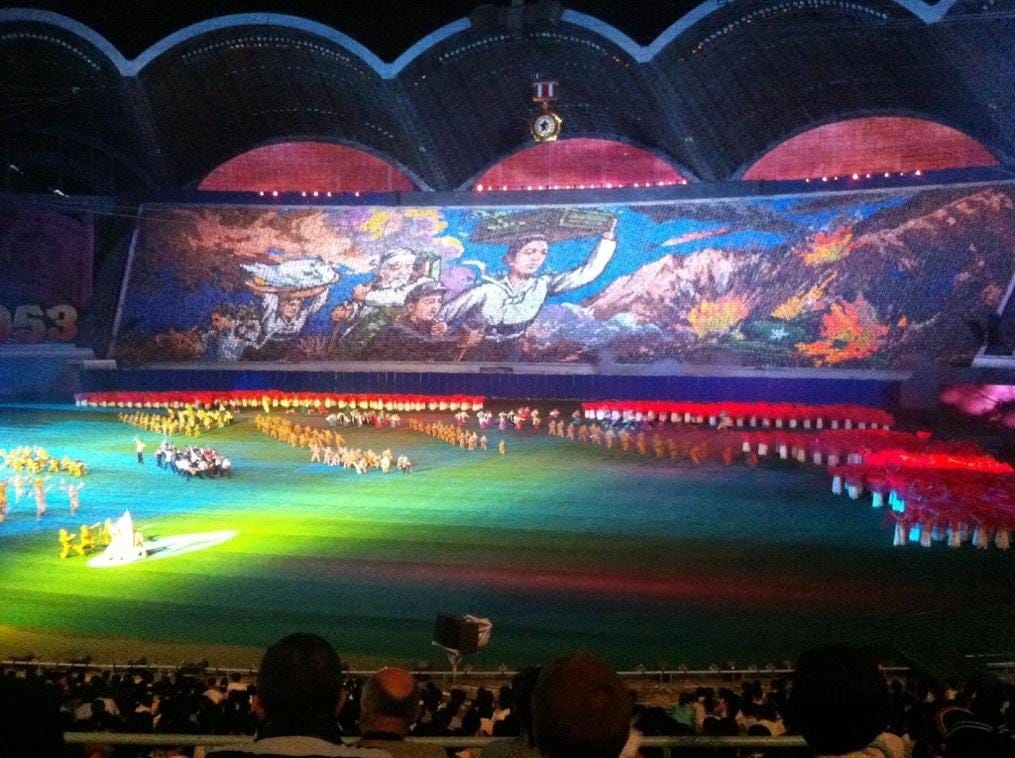
Jonathan Cheng’s new book “Korean Messiah” updates my understanding of North Korea, and helps bridge the gap between the shown and the experienced, between the heavily airbrushed image of the country and my own interactions with its people, by revealing the remarkable influence of Christianity on the country and on its founder Kim Il-Sung.
“…a remarkable, timely and breathtaking masterwork that demands to be read."
Part social history and part historical biography, Cheng’s sprawling seven-hundred-plus-page work also helps explain the historical and spiritual conditions of the North Korean system, tracing how this once deeply Christian country became home to one of the most durable political cults in modern history.
It is an astonishingly challenging subject, one Cheng found almost no prior literature on, and made harder by the nature of North Korea itself, where history and mythology have merged, subsuming much evidence needed to understand its origins. But against these odds, Cheng has succeeded, drawing from interviews and archival material to write a brilliant historical narrative reflecting on nationalism, religion, historical trauma, and human resilience.
The Jerusalem of the East
Cheng’s starting point is the late 1800s. Korea, a conservative Confucianist country that had held its place for centuries within a stable East Asian order, is being compressed on multiple fronts: the arrival of Western colonial powers, the rise of Imperial Japan, and the decay of Qing dynasty China. Into this volatile mix come American missionaries such as Samuel A. Moffett, who arrives to “set up the cross of Christ” in the Hermit Kingdom. They are ignored, face the genuine risk of beheading, and little comes of their proselytizing until the destruction of Pyongyang in the 1894 Sino-Japanese War hands them an opening. The missionaries work together with locals to rebuild the ruined city, and the Koreans take to the foreigners and their strange religion, with such speed and fervour that within a decade Pyongyang is hailed as the “Jerusalem of the East.”
However, darker chapters lie ahead. Imperial Japan slowly and inexorably subjugates Korea, forcing its emperor to abdicate, and annexing the country wholesale in 1910. Koreans now reduced to servitude in a land no more their own, this profound national tragedy gives birth to a generation of deeply Christian nationalists: An Ch’ang-ho, the silver-tongued Christian orator; Yi Tong-hwi, advocate of armed struggle; and Kim Hyong-jik, the student activist. Cheng captures the tension they face, caught between tradition and modernity, militarism and pacifism, and profound human emotions: righteous anger, raw fear and deeply held hope. Christianity itself is pulled in every direction: first embraced as an antidote to Korean backwardness, then adopted as a defining mark of national identity, and many decades later, replaced by an even more enduring state religion revolving around one man.
The Captain History Underestimated
That man is Kim Il-Sung, born 1912 to Kim Hyong-jik, the aforementioned student activist, and his wife, Kang Pan-sok. The couple are Christians, and the boy Kim is thus raised in this atmosphere thick with historical tragedy and national awakening. Other Christians play key roles in Kim’s life, such as Rev. Son Chong-do, the Methodist minister who became his surrogate father. And while Kim’s family could boast of excellent nationalistic credentials, Kim’s rise to supremacy years later is anything but preordained.
Yes, Kim boasts of military credentials as a guerrilla fighting the Japanese in the 1930s, and as a captain in the Soviet Red Army during World War II, but on the eve of final Japanese defeat, he is by some accounts an insignificant figure, a man some place “on the sidelines of history” and “just another Korean guerrilla exile.” Nonetheless, the 33-year-old captain somehow becomes Moscow’s point man in Soviet-backed North Korea, a rise as startling in its speed as mysterious in its origins, as Cheng finds few credible explanations for Kim’s stunning ascent.
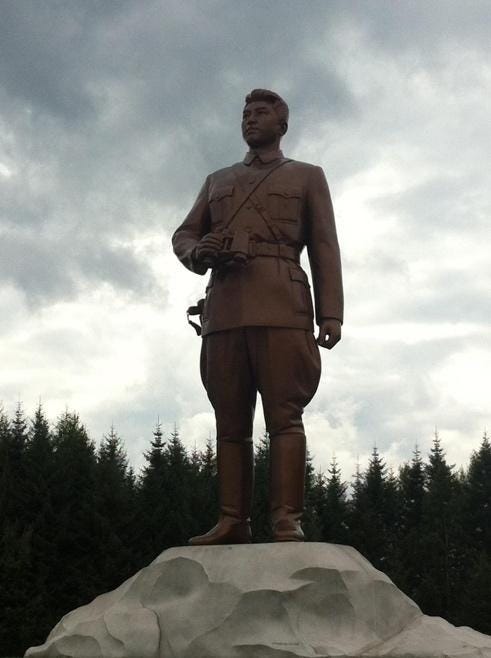
It is as if history had underestimated the man, and would continue to do so. Soon after the devastating Korean War (which saw Pyongyang’s churches and buildings destroyed by U.S. bombers), Kim deftly maneuvered between Moscow and Beijing, swiftly dispatched his internal rivals and would-be challengers, and consolidated his leadership in North Korea. All the while, official hagiographers quickly embellished his past: Ten-year-old Kim is painted returning to Korea crossing the rugged mountains alone. Eighteen-year-old Kim supposedly conceived the Juche ideology, and it was General Kim who led the fictitious Korean People’s Revolutionary Army to victory over the Japanese, diminishing the role of the Soviet Red Army. And what of Kim’s Christian past? Downplayed or wiped clean. In this way, history and mythology merge, and the audacity of the project at first rivals, then surpasses, that of fellow Communist giants Stalin and Mao.
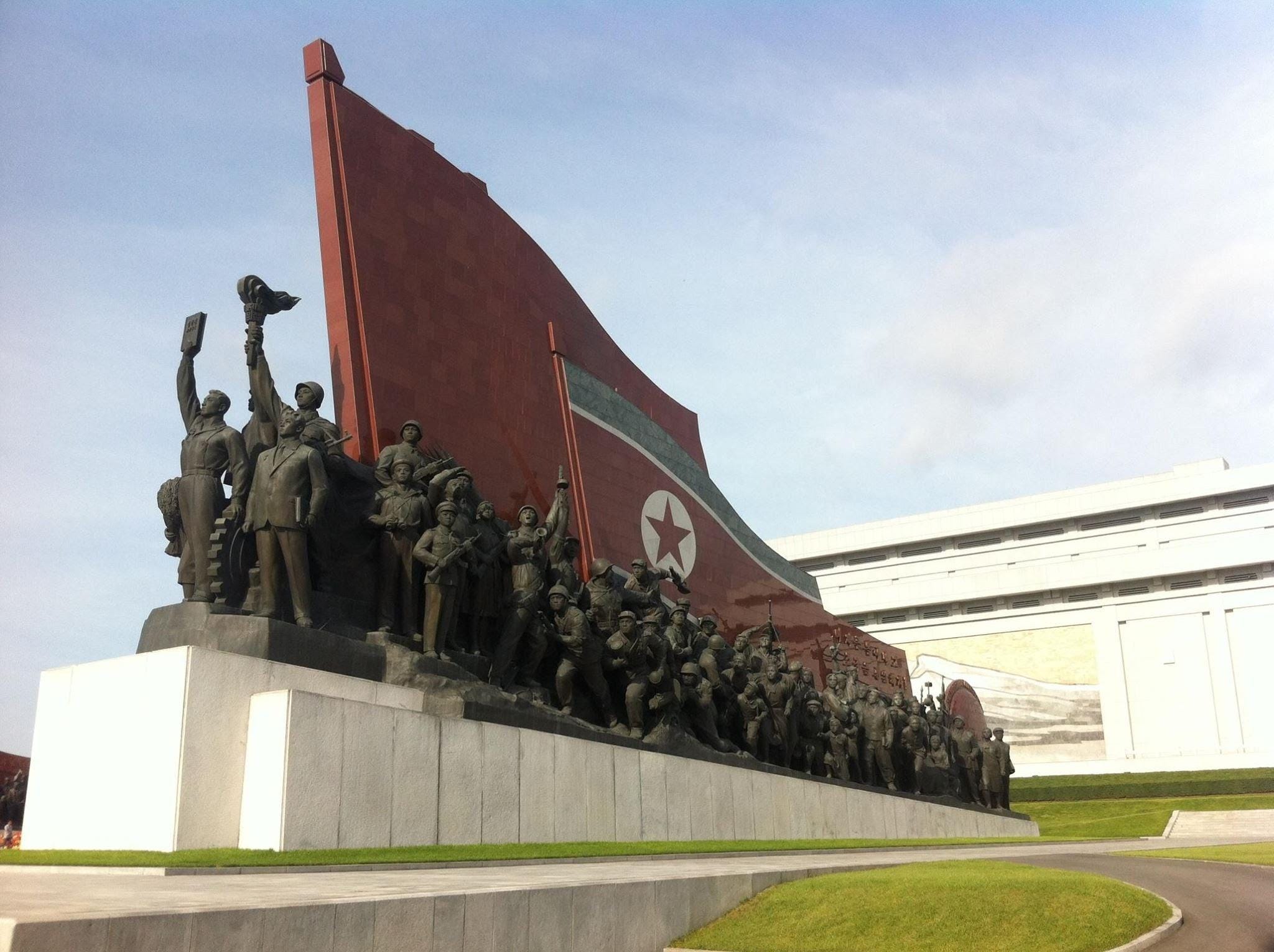
By his later years, long after Stalin and Mao’s legacy had been reassessed, Kim Il-Sung stood alone as the greatest cult of personality the world had ever seen. He was immortalized with hundreds of statues and portraits throughout North Korea, and honored and worshipped like a god by its people who dutifully wear lapel badges bearing his portrait.
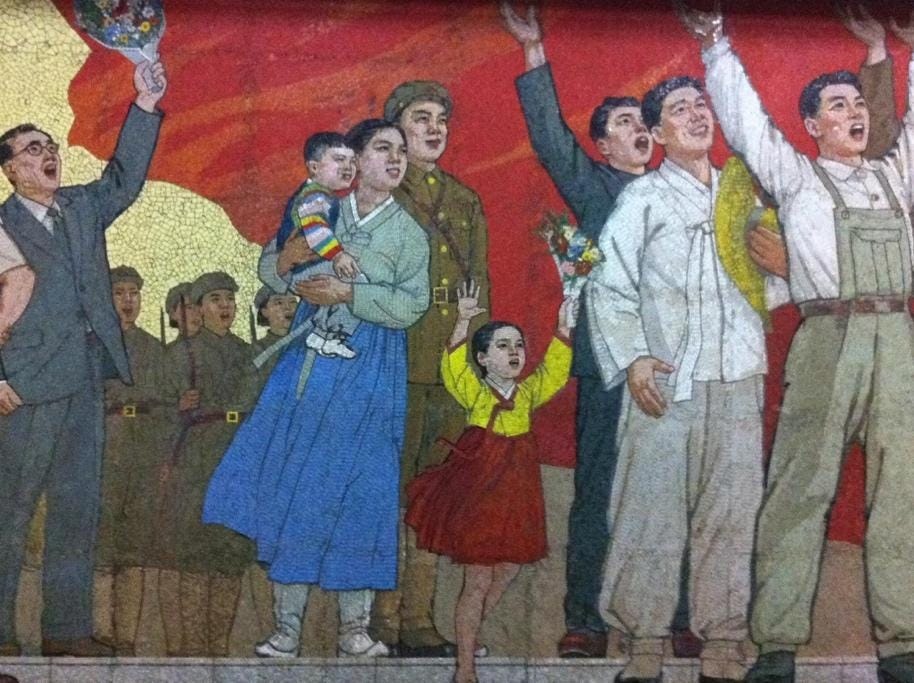
It is tempting to let one’s eyes glaze over these icons and invocations, to succumb to cynicism or to give in to simplistic explanations, but Cheng avoids this trap. He suggests that after decades of colonial subjugation and an endless cycle of wars that killed millions, a deep yearning welled in the traumatized yet proud Korean people for one of their own to provide a heroic narrative. And in this confused post-war state, where competing ideologies vied for primacy, Kim Il-Sung’s ideology — an eclectic mix of the hero-narrative, communism and Christian elements — conveniently stepped in as the ideological heir to Christianity to crystallize the Korean national identity. This new state ideology drew on imagery and constructs familiar to the heavily Christianized north: the preordained coming of a savior, the holy trinity of the leader’s family, and study halls and self-criticism mirroring churches and confessions.
Further, this metamorphic process of Kim Il-Sung-ism replacing Christianity was not due to Kim’s efforts alone. Others were complicit and while some benefitted from this, some did not. There was Rev. Kim Ik-du, the celebrated Christian revivalist who was co-opted into drawing North Korea’s sizable Christian community into the national fold, only to be killed as a traitor in 1950. There was Hwang Jang-yop, the chief official tasked with propagating Kim’s Juche ideology, but who later defected to South Korea in 1997 after falling out with Kim’s son and successor, Kim Jong-il.
Most poignant of all was Kang Yang-uk, Kim’s right-hand man for religious issues, whose life was marked by Learian registers of tragedy, revenge, and faith. A soft-spoken man, whose early ambition was a quiet life devoted to the Church, Kang rose to become a key ally to the Great Leader. But his life was shattered when assassins bombed his home, killing his son and daughter. In the book’s most chilling scene, Kim consoles Kang, urges him to turn his “sorrow into contempt,” and pressing a pistol into his hand, says to the broken man, “Now, let’s take revenge.” Rising from despair, Kang’s zeal for Christ transmuted into fanatic rage at North Korea’s enemies, among them the Christians who dared challenge the State.
The Autumn of the Great Leader
At its peak, Kim’s cult of personality saw all North Korean history, mythology, and hagiography revolving around him. The man himself was now ethereal, less a person than the embodied spirit of a nation, and to wonder aloud about Kim’s mortality brought punishment.
But as time passes for all men, the autumn of Kim’s life also saw him reminiscing about his parents and his legacy, and a coming-to-terms with his Christian heritage, which he set down in his memoirs in 1992. This forms the last third of Cheng’s book and here we see tantalizing details of the person behind the personage, a welcome respite from the flattened, heavily embellished narrative of Kim’s life. His memoirs, written with what Cheng describes as “an unmistakable sense of wistfulness,” reveal never-before-seen personal reflections: his gratitude for the Christians in his life, among them his surrogate father Rev. Son Chong-do, and his near-remorse over the treatment of Christians who were “indiscriminately prejudiced against… in spite of my repeated warning against it.”
Though some scholars believe that Kim’s “coming-to-Jesus” moment was merely a ploy to whitewash his reputation, this slight unmasking of the man foreshadowed momentous albeit temporary changes. North Korea suddenly permitted state-sanctioned Christian congregations to worship, allowed foreign Christian delegations in, and improved relations with South Korea and the external world. Even world-famous evangelist Billy Graham is invited to preach, and met the Great Leader.
But in 1994, the Great Leader breathed his last and North Korea dissolved into a monumental outpouring of grief. Cheng hints at lost potential; weeks earlier, Jimmy Carter’s visit had defused the nuclear weapons crisis and sown the seeds for a first-ever inter-Korean summit, but Kim passed before the summit, leaving his coming-to-terms project somehow unfinished. Yes, the North-South détente did hold for a time; the year 2000 brought the first North-South family reunions and the summit between North and South Korea, but as the years passed, the politics changed. North and South Korea eventually drifted back into animosity and mistrust, and a curtain drew on North Korea’s opening to the world.
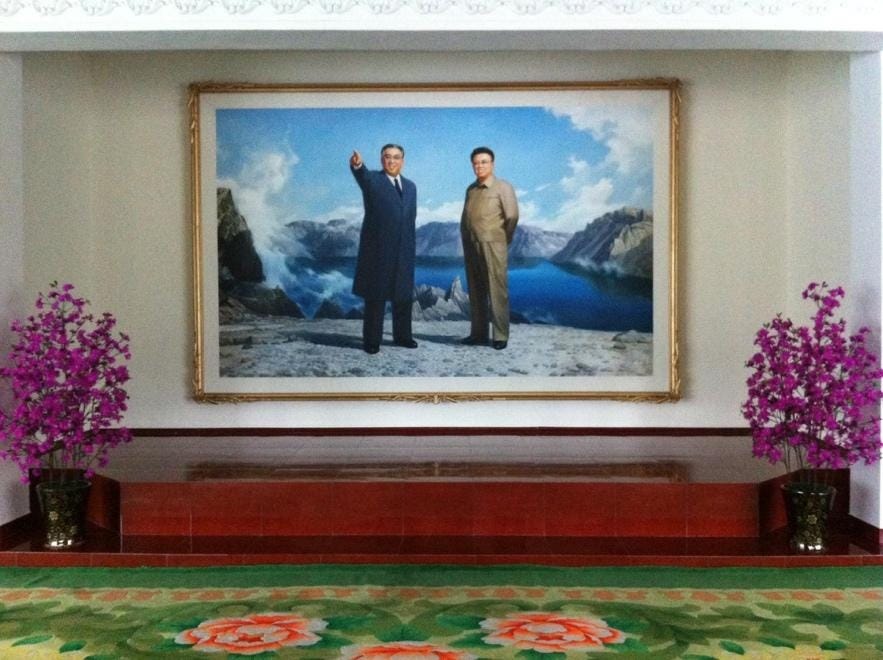
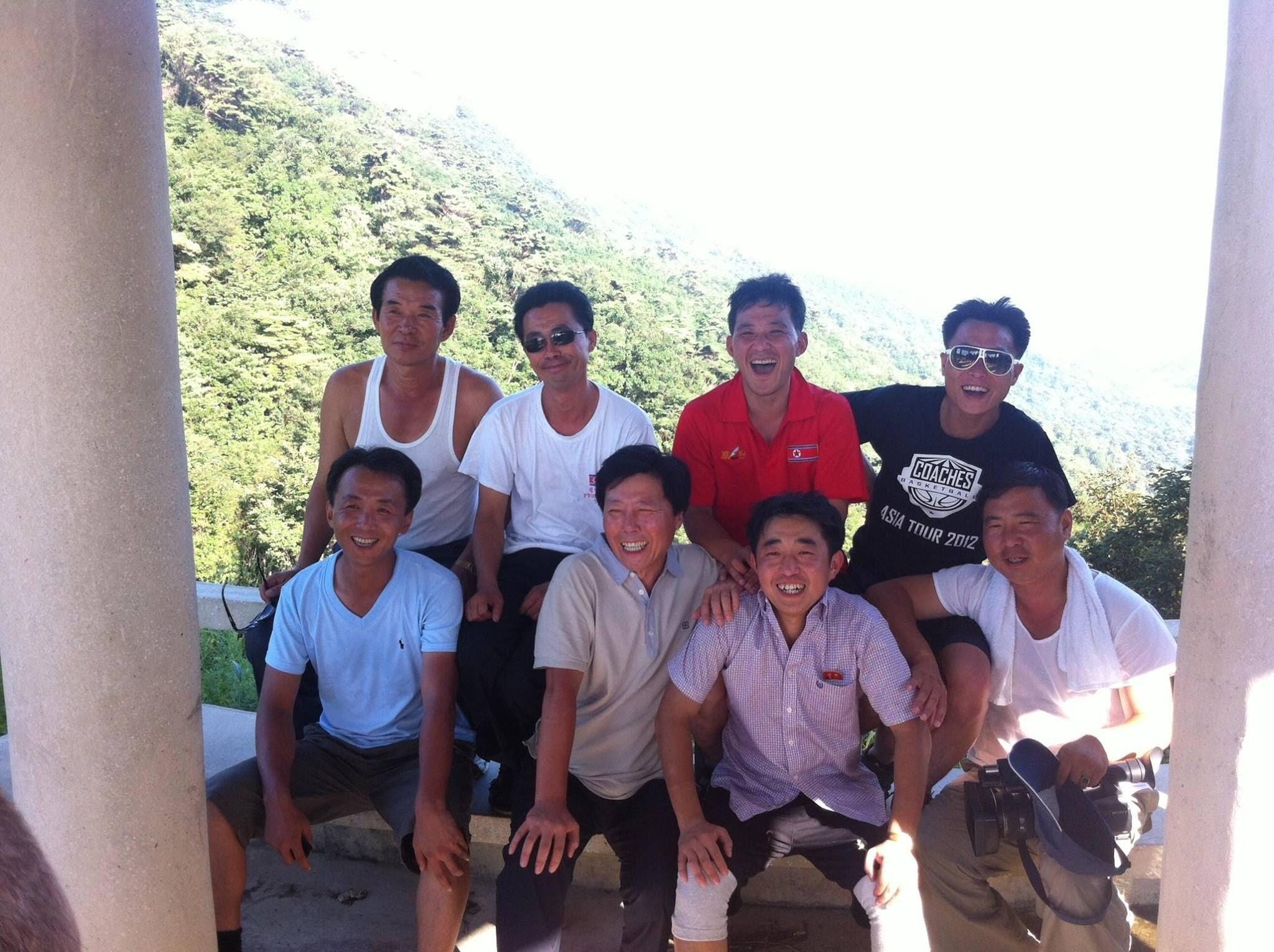
This book endures in the memory long after reading. After finishing it, I came away with a sense that this was not a work that sought merely to uncover a hidden history, or to pass judgement on Kim Il-Sung or North Korea, a “regime” that has surprised naysayers with its durability, and with China – North Korea relations once again in the global spotlight, may well have been underestimated on the world stage. Instead, this work, originally conceived as a magazine article that expanded into a decade-plus-long project, reveals the very nature of collective nation-building and individual sense-making. Nearly destroyed by incredible internal and external pressure, the Korean nation and the Korean person drew, for better or worse, on the ideals, iconography, and ideology of Christianity, Communism, and yes, the Cult of Kim Il-Sung, for their sustenance and reconstitution. Thus, Cheng’s book lingers as a meditation on Korean history, on national and personal trauma, and as Cheng reveals, as a tribute to the spirit and resilience of the North Korean people, the faces of which I recall more vividly than the state propaganda. Behind North Korea’s impenetrable wall, its flattened and controlled narrative, its indecipherable actions coded in the blustering rhetoric, were and have always been real people – living, breathing, imperfect human beings grappling with history and meaning, and their own personal and unique circumstances often beyond their agency.
This does not suggest that the global community be naïve about Kim’s legacy and the brutality of the North Korean regime – the country remains a violent outlier to international norms – but it does suggest that there might be clues to help us at least understand how the system came to be, even as we remain vigilant about the system itself and critical about the action it takes. To this effort, Jonathan Cheng has written a remarkable, timely and breathtaking masterwork that demands to be read.
Calvin Quek is Executive Director, Nature Finance, Oxford Sustainable Finance Group. Director, Transition Asia. All photos by Calvin Quek.
