


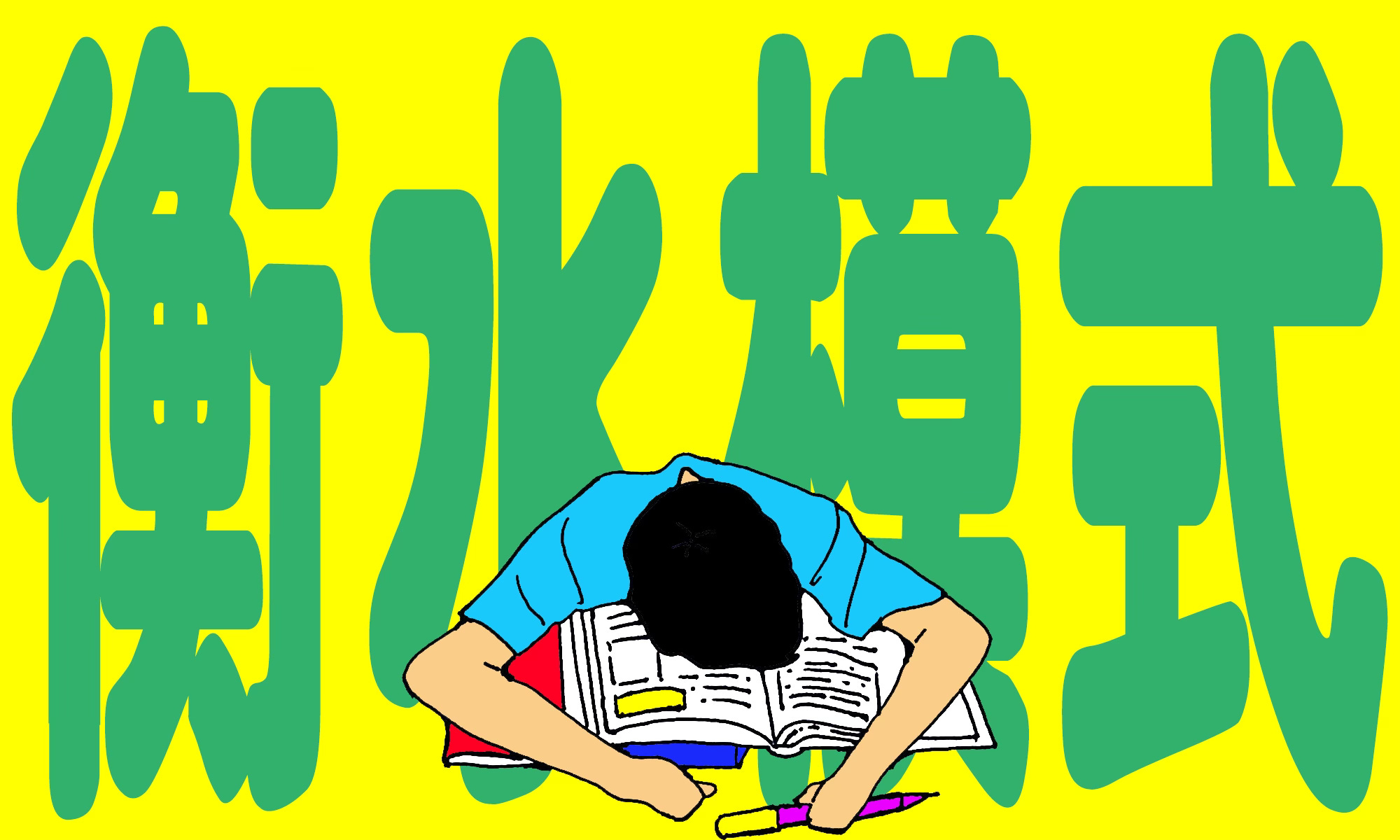
Our phrase of the week is: “Hengshui model” (衡水模式 héng shuǐ mó shì).
Context
Hengshui High School is one of China’s top schools, located in Hengshui (衡水), a third-tier city in rural Hebei Province.
At its peak in 2019, 275 Hengshui students were admitted to China’s top two universities, Tsinghua (清华) and Peking University (北大), out of just 279 total spots allocated to all of Hebei Province.
The school is famous for its military-style approach, with students studying 14.5 hours daily. Teachers work under intense pressure: salaries are tied to class performance posted on notice boards, and 8% are removed annually for underperformance.
In recent years, admissions to top universities have collapsed, with just 45 Hengshui students admitted to Tsinghua and Peking in 2025, a fifth of its 2019 numbers.
This fall resulted from policy changes restricting cross-district recruitment students starting in 2018. The 2021 “Double Reduction Policy” (双减政策) further levelled the playing field, and by 2024, cross-district recruitment was banned entirely.
This ended Hengshui’s practice of cherry-picking the province’s most talented students, prompting some in the media to ask:
“What happened to Hengshui High School?
How did the once-glittering Hengshui model suddenly lose its magic?”
衡水中学怎么了,曾经金光闪闪的衡水模式怎么突然失去了魔力?
And with that, we have our Sinica Phrase of the Week.
What it means
The “Hengshui model” (衡水模式) refers to an ultra-intensive, exam-focused education system pioneered by Hengshui High School. “Hengshui” (衡水) is the school name, and “model” (模式) means “pattern” or “system.”
It began in 1992 when Li Jinchi (李金池) became principal of what was then an underperforming county school near the bottom of Hebei Province’s rankings. Li introduced military-style discipline and relentless exam drilling. By 1995, it had transformed into a full-time boarding school. By 2000, it topped Hebei’s exam rankings—a position it’s held ever since.
The term “Hengshui model” emerged in Chinese media around the early 2000s as the school’s success attracted national attention. Initially celebrated as proof that a poor, rural school could compete with elite urban institutions through discipline and hard work, schools across China began replicating its methods.
But Hengshui soon evolved into a ruthless business—the “super school” (超级学校) model, headhunting elite students from across Hebei and beyond, offering scholarships to the brightest. Elite students produced elite results, attracting more families willing to pay high fees to send their kids there.
Critics argue the model inflicted huge damage on China’s education ecosystem.
Others say the kerfuffle around the Hengshui conveniently distracts from real unfairness in the system between rural and urban schools in China — students in Beijing, for example, receive proportionally many more Tsinghua and Peking spots than all of Hebei Province combined.
While many also believe that this brutal approach is the best way to keep the system fair, with performance judged on merit, and success determined by objective exam scores rather than connections or wealth.
Either way, “Hengshui Model” always gets a strong reaction!
Andrew Methven is the author of RealTime Mandarin, a resource which helps you bridge the gap to real-world fluency in Mandarin, stay informed about China, and communicate with confidence—all through weekly immersion in real news. Subscribe for free here.
