


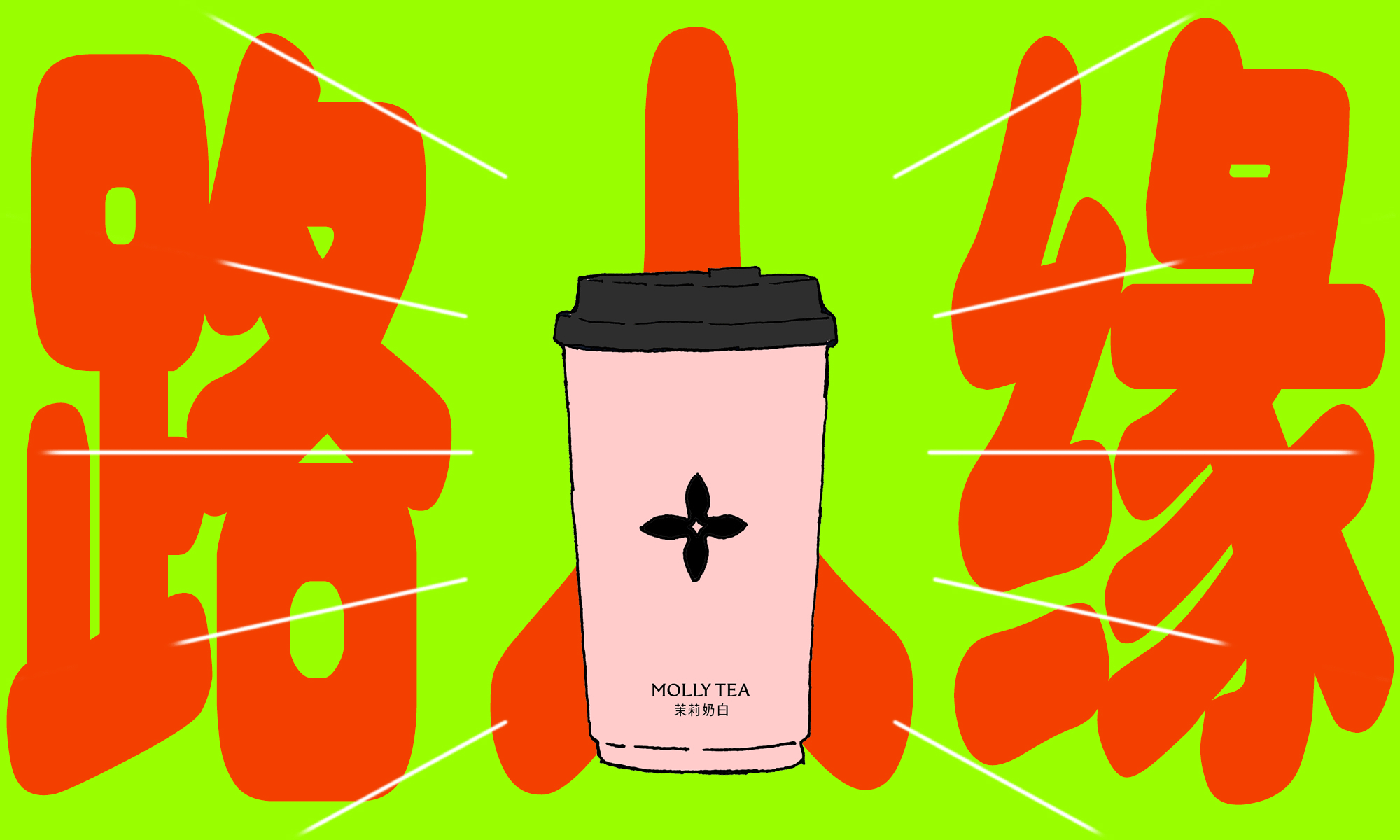
Our phrase of the week is: “mass appeal” (路人缘 lù rén yuán)
Context
On July 2, a court in Suzhou ruled that Molly Tea (茉莉奶白), one of China’s rising bubble tea brands, had infringed seven registered trademarks belonging to Louis Vuitton. The Shenzhen-based tea company’s logo, a black-and-white four-petal flower, closely resembles LV’s iconic monogram flower.
The court ordered Molly Tea to pay 10 million yuan ($1.4 million) in damages plus 300,000 yuan in legal costs, apologise publicly to LV, and remove all infringing designs.
Shortly after the court decision was announced, the story began trending on social media. People expressed sympathy for the tea brand, shared images of their Molly Tea receipts in support, and noted the unfairness of a fight between a 20,000-yuan handbag and an 18-yuan cup of tea.
Some even suggested that LV’s celebrated monogram is itself borrowed from Chinese culture, pointing to the “treasure flower” pattern (宝相花), a stylised floral motif found in Buddhist art from the Tang Dynasty (618-907).
So although LV won in the courtroom, its victory in the court of public opinion is less clear:
“It wasn’t a total win for LV.
They got the money, but some say it cost them their mass appeal.”
LV这边似乎并没有全然胜利——拿到了钱,却被一些声音形容为”丢了路人缘”。
And with that, we have our Sinica Phrase of the Week.
What it means
“Mass appeal” (路人缘 lù rén yuán) is an internet slang term which comes from fan culture. The characters translate as: “passer-by” (路人 lùrén), “affinity” (缘 yuán).
In Chinese, a “passer-by” (路人) is a stranger, or a neutral onlooker. In fan circles, it specifically means people outside the fans of a particular celebrity: they are not fans, not haters, just the general public.
The second part, “affinity” (缘), is the same character used in “fateful connection” (缘分), the bond that draws people together. So “passer-by affinity” is the appeal a celebrity enjoys among people who aren’t their core fans.
The phrase emerged in the early days of the Chinese internet as “fan-circle slang” (饭圈流行语). It describes stars who are liked even by people with no interest in celebrity culture.
Over time, the phrase became a measure of a star’s mainstream popularity. And it’s now evolved beyond celebrities and can apply to brands and companies too.
Which brings us back to LV. In its legal battle with Molly Tea, the luxury brand won in legal terms. But whether it can win back its “mass appeal” is another matter.
Andrew Methven is the author of RealTime Mandarin, a resource which helps you bridge the gap to real-world fluency in Mandarin, stay informed about China, and communicate with confidence—all through weekly immersion in real news. Subscribe for free here.
