


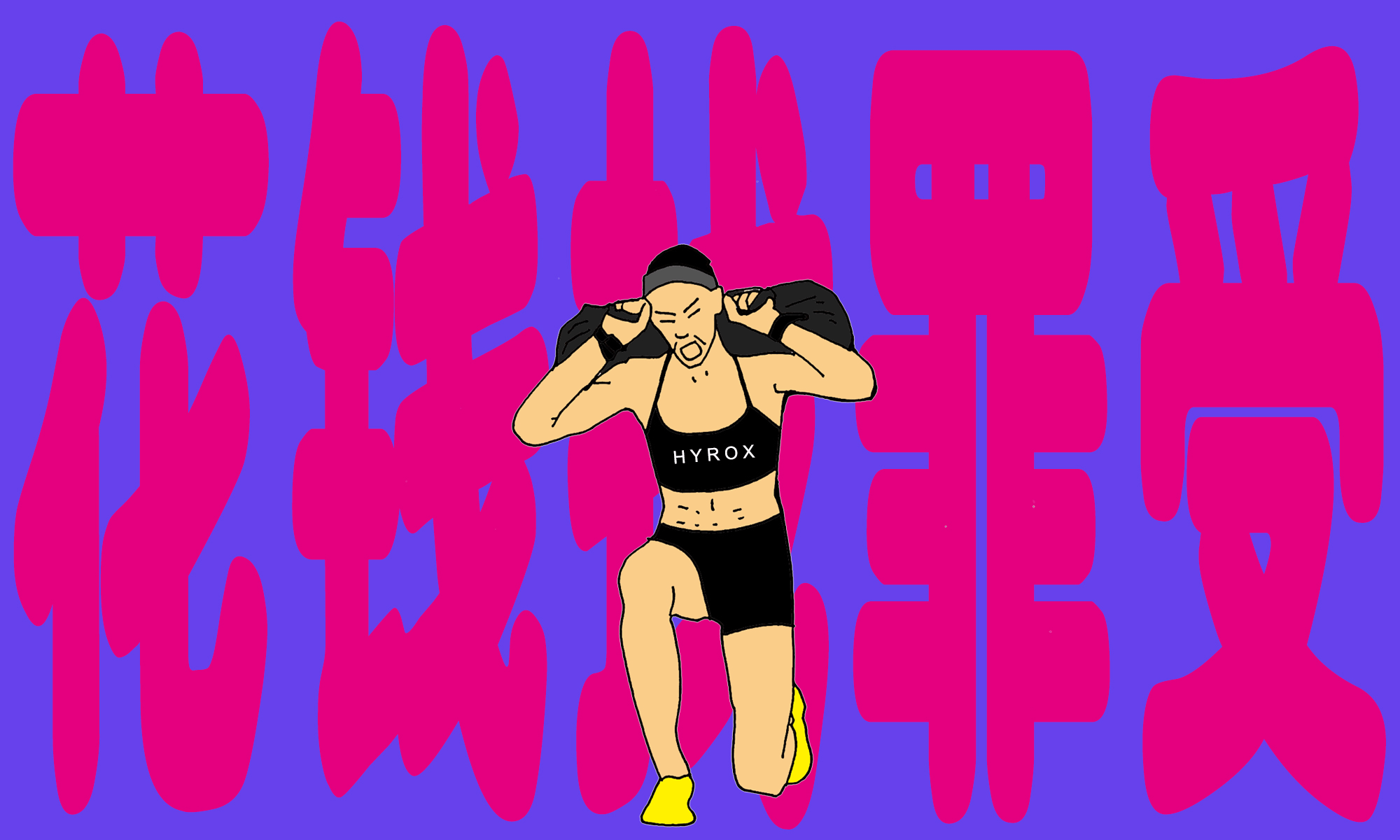
Our phrase of the week is: “paying to suffer” (花钱找罪受 huā qián zhǎo zuì shòu)
Context
On September 12, at the Beijing leg of the 2026 to 2027 HYROX season, the Australian athlete and world record holder Joanna Wietrzyk lost control of her bowels and experienced explosive diarrhoea partway through the women’s elite race. She kept going anyway, and won, finishing in one hour, one minute and twenty-three seconds.
Despite the clear hygiene risk, and the breach of HYROX’s own rules, the race was not stopped by the organisers. Their response to criticism was seen as evasive and arrogant, and their eventual apology came for too late.
Critics accused HYROX of double standards. Wietrzyk is a leading elite athlete and a global brand ambassador for PUMA, HYROX's main sponsor, which had recently renewed a large sponsorship deal with the event. So she was too important a commercial asset to have been stopped.
HYROX entered mainland China in 2024 and has grown fast. Over 10,000 entrants took part in this Beijing leg alone, and around 55,000 participants nationwide took part across the 2025 to 2026 season.
Part of its appeal is how it has become “social currency” (社交货币), or a status symbol, among China’s fitness-minded middle class, who are drawn by the “emotional value” (情绪价值) of feeling like an elite athlete.
That is what makes the Beijing incident, and the company’s dismissive response to it, land so badly. As it’s exposed how little ordinary paying competitors actually matter to the business, which has left many asking why it became so popular in the first place:
“How on earth has Hyrox, which is widely viewed as ‘paying to suffer’, managed to dominate the fitness world?”
在普通人眼中近乎”花钱找罪受”的HYROX,究竟凭什么跻身健身界顶流IP?
And with that, we have our Sinica Phrase of the Week.
What it means
“Paying to suffer” (花钱找罪受 huā qián zhǎo zuì shòu), sometimes said as “paying money to buy suffering” (花钱买罪受), is a modern colloquial phrase with no single classical literary source.
It describes spending money and getting nothing but trouble, pain or torment instead of the enjoyment or service you expected.
The word for “to suffer” (受罪) became common speech after Buddhist concepts of sin and karma entered everyday usage, describing suffering or punishment as a kind of debt.
Vernacular novels of the Ming and Qing dynasties, such as Dream of the Red Chamber and Stories to Awaken the World, have similar constructions for bringing trouble on oneself, such as “seeking out worry and inviting resentment” (自去寻愁觅恨) or “making trouble where there was none” (没事找事).
The phrase, “paying to suffer”, is a common expression in modern Chinese. It’s always delivered with a self-mocking edge, and describes a purchase that fails to deliver on its promise.
In the context of HYROX the phrase has two levels of meaning. The first is that competitors spend large amounts of money to endure the punishing physical challenge of the competition. The second is specific to those who came after Joanna Wietrzyk, who literally had to suffer the stench of what she left behind for them on the track.
Andrew Methven is the author of RealTime Mandarin, a resource which helps you bridge the gap to real-world fluency in Mandarin, stay informed about China, and communicate with confidence—all through weekly immersion in real news. Subscribe for free here.
