


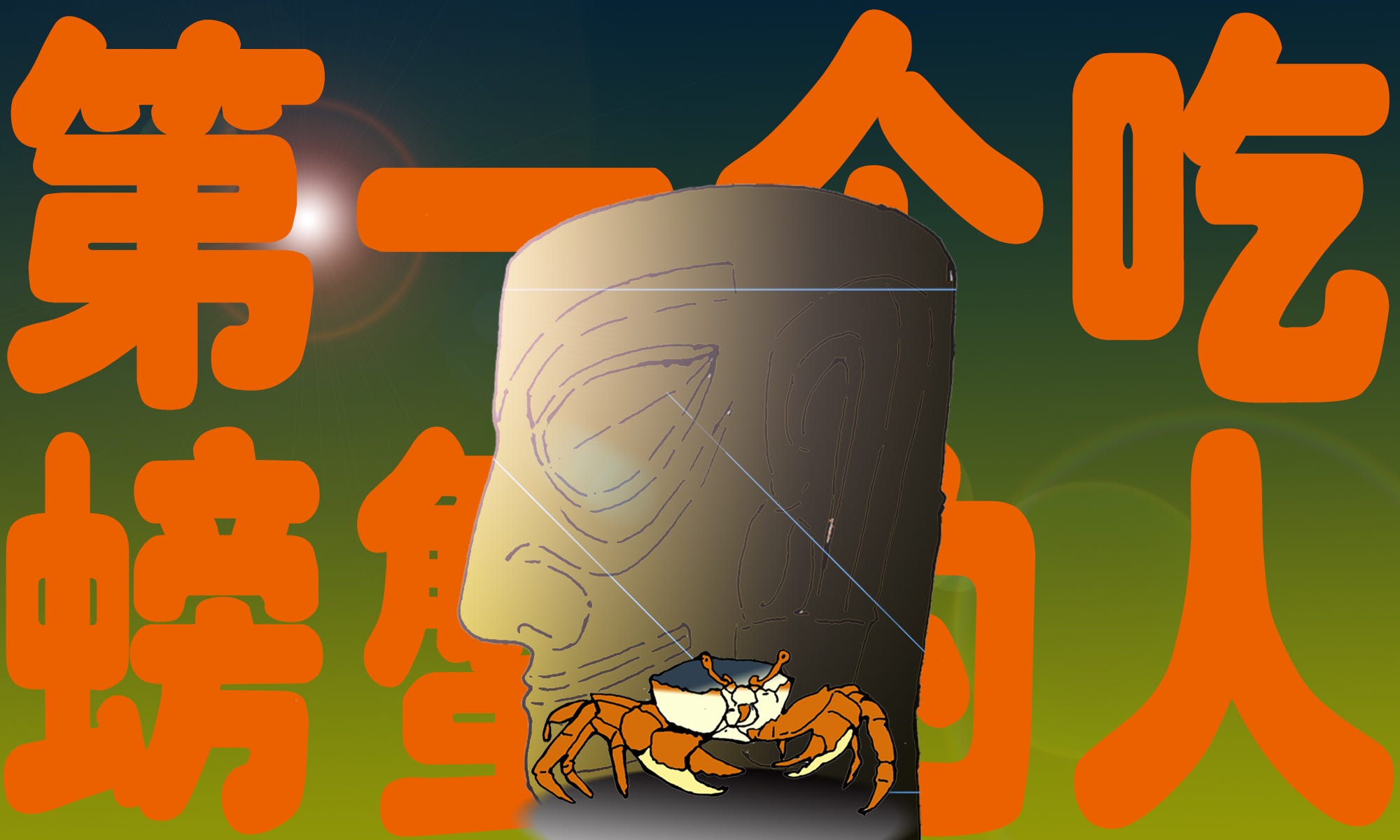
Our phrase of the week is: “the first to eat the crab” (第一个吃螃蟹的人 dì yī ge chī páng xiè de rén)
Context
China’s first fully AI-made film opened in cinemas on October 23. Sanxingdui: Future Past (三星堆:未来往事) is 100 minutes long, and has no real actors.
The movie was a total flop. It took just 100,000 yuan on its first day, and by October 26, screenings were averaging 0.3 viewers each.
The story is set 3,000 years in the future, when a super-intelligent AI takes over the world, then collapses. An astronaut travels back in time to warn humanity, but lands by mistake in ancient China, at the Bronze Age site of Sanxingdui (三星堆).
The film was made by Bona Film Group (博纳影业), one of China’s biggest film studios and the company behind the 2021 blockbuster The Battle at Lake Changjin (长津湖).
According to Bona’s chief executive, Jiang Defu (蒋德富), the team first planned a live-action Sanxingdui film. But the designs were so ambitious that the cost was prohibitive, and the project was shelved.
The rapid improvement of AI video tools led Bona to make the film entirely with AI instead. One critic gave the studio credit for its daring, but was clear on their opinion of the movie:
“As China’s first AI cinema release, Sanxingdui: Future Past can be seen as a bold experiment, its creator being the first to eat the crab.
But the price of experimenting is not something audiences are obliged to pay for.”
作为首部AI院线电影,《三星堆:未来往事》可以被视作一次有勇气的尝试,做第一个吃螃蟹的人。至于吃螃蟹的成本,观众没有义务为此买单。
And with that, we have our Sinica Phrase of the Week.
What it means
“The first to eat the crab” is a Chinese folk saying. The individual characters mean “the first” (第一个 dì yī ge), “to eat” (吃 chī), “crab” (螃蟹 páng xiè) and “person” (的人 de rén). It describes someone brave enough to try something new before anyone else.
There are two alternative backstories to this phrase.
The first backstory is set a long time ago, during the time of Yu the Great (大禹), the mythical founder of the Xia dynasty (c. 2070–1600 BCE), around 4,000 years ago. At that time crabs were seen as a pest, and not considered edible. They burrowed into rice paddies and nipped farm workers, so people called them “pincer bugs” (夹人虫). When Yu came south to tame floods, his foreman Ba Jie (巴解) dug a trench around a city and filled it with boiling water. Thousands of crabs fell in and died, turning bright red and giving off a delicious smell. Ba Jie cracked one open and took a bite, and he confirmed it tasted great. In his honour, people combined his name, “Jie” (解), with the character for “bug” (虫) to make the character for “crab” (蟹).
The second possible backstory has no fixed date. It’s set in the city of Shaoxing (绍兴), in modern-day Zhejiang province. Its officials’ advisers ( known as 师爷 in Chinese) were famous during the Ming (1368–1644) and Qing (1644–1912) dynasties. In this story, the city of Shaoxing (绍兴) was overrun by crabs. A local official’s adviser told people to fill old vats with salt water which would attract the crabs to crawl in and then they would die. It worked, but nobody knew what to do with the dead crabs. So the adviser stepped forward and ate one publicly to demonstrate they could be eaten, and enjoyed.
The saying in its modern form owes its popularity to Lu Xun (鲁迅), arguably modern China’s most important and influential writer, who coincidentally was born in Shaoxing. In 1932, he gave a talk at Fu Ren University (辅仁大学) in Beijing called Two Thoughts This Spring (今春的两种感想). Many of history’s lessons, he argued, were paid for with great sacrifice. And than we only know which foods are poisonous now, because people once died eating them:
“The first person to eat a crab deserves our admiration.
Who but a hero would have dared to eat it?”
第一次吃螃蟹的人是很可佩服的,不是勇士谁敢去吃它呢?
He went on to say that someone must also have tried eating spiders. They just didn’t taste good, so nobody ate them again.
Today, the saying is used to praise pioneers in any field: the first to try a new technology, enter a new market, or break with convention. Risk is built into the compliment. The first to eat the crab is brave because nobody yet knows how it will turn out. And sometimes the end result may not be good.
Bona Film Group was “the first to eat the crab” in the world of AI movies. But as Lu Xun pointed out a century ago, that doesn’t necessarily work out well.
Andrew Methven is the author of RealTime Mandarin, a resource which helps you bridge the gap to real-world fluency in Mandarin, stay informed about China, and communicate with confidence—all through weekly immersion in real news. Subscribe for free here.
