


The tension between party and state is an important one. Proving loyalty to a party (or its leader) is often essential to gaining, or keeping, a government office. But ideological purity is rarely the most important asset for running a country well. Do you want to prioritize competence, or political conformity?
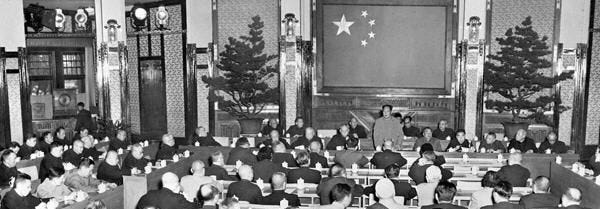
In the mid-1950s the Chinese Communist Party was on a heater. After facing extermination in the 1920s, and surviving by the skin of its teeth thanks to its Long March to Yan’an, the Party rallied through the war against Japan. Then, against the better armed and better supported KMT in the Civil War, the Communists swept to victory fueled largely by popular support, and on October 1, 1949, declared the founding of the People’s Republic. The CPC continued to defy the odds as it rapidly rebuilt the nation’s economy after decades of war and imperialism and then fought the United States to a standstill in the Korean War. Just a few years removed from being guerillas living in caves, the Communists now found themselves leading the world’s most populous country with momentum and aspirations to become a great power.
The Party had overcome numerous opponents during its rise, and it maintained a long list of enemies. In the early years of the PRC, a campaign against “counterrevolutionaries” suspected of harboring Nationalist sympathies had been repressive and destructive: more than a million people may have been killed between

