


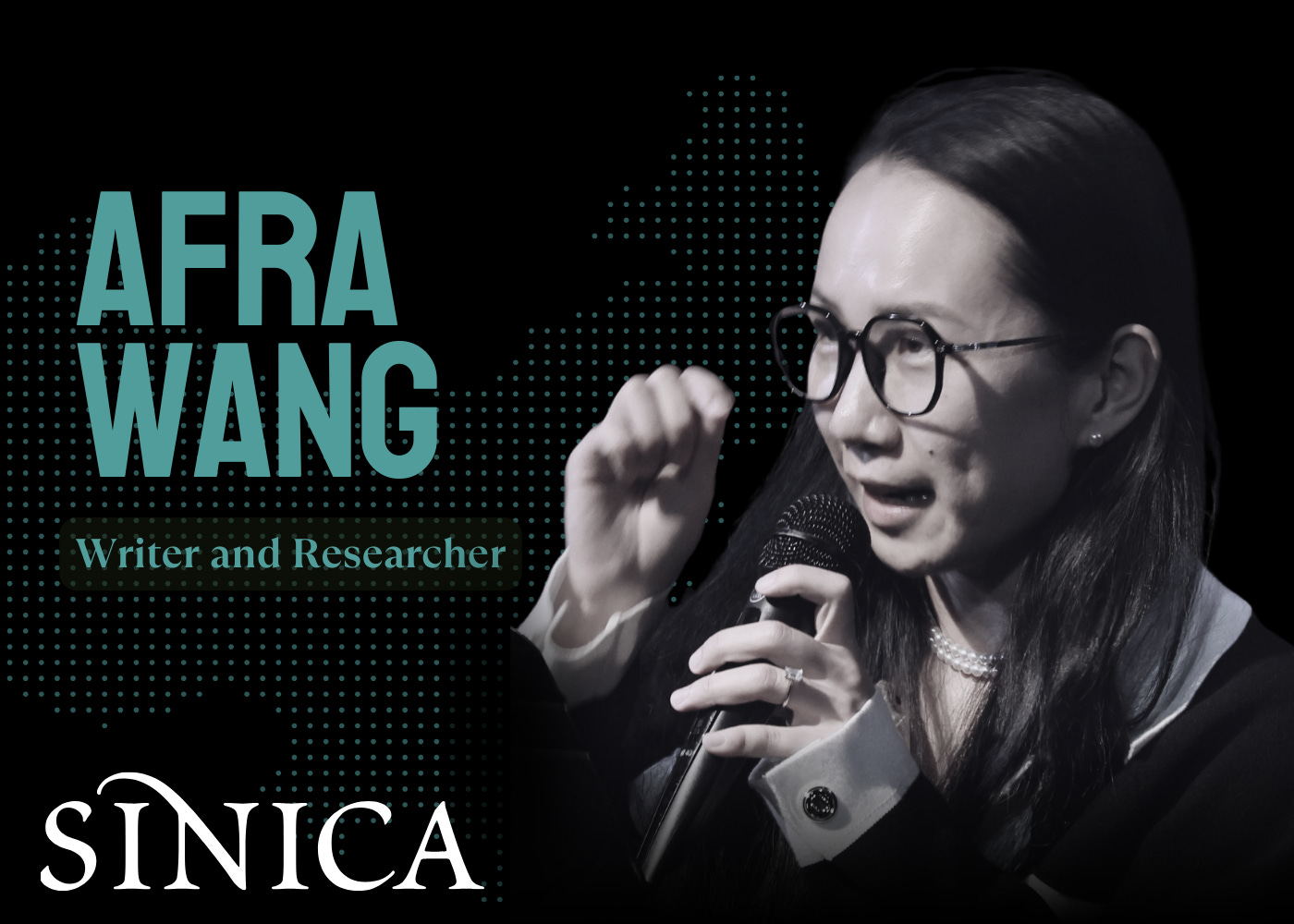
Transcript, courtesy of CadreScripts, further down the page. Image by Keya Zhou. Listen in the embedded player above!
This week on Sinica, I speak with Afra Wang, a writer working between London and the Bay Area, currently a fellow with Gov.AI.
We’re talking today about her recent WIRED piece on what might be China’s most influential science fiction project you’ve never heard of: The Morning Star of Lingao (Língáo Qǐmíng 临高启明), a sprawling, crowdsourced novel about time travelers who bootstrap an industrial revolution in Ming Dynasty Hainan. More than a thought experiment in alternate history, it’s the ur-text of China’s “Industrial Party” (gōngyè dǎng 工业党) — the loose intellectual movement that sees engineering capability as the true source of national power. We discuss what the novel reveals about how China thinks about failure, modernity, and salvation, and why, just as Americans are waking up to China’s industrial might, the worldview that helped produce it may already be losing its grip.
5:27 – Being a cultural in-betweener: code-switching across moral and epistemic registers
10:25 – Double consciousness and converging aesthetic standards
12:05 – “The greatest Chinese science fiction” — an ironic title for a poorly written cult classic
14:18 – Bridging STEM and humanities: the KPI-coded language of tech optimization
16:08 – China’s post-Industrial Party moment: from “try hard” to “lie flat”
17:01 – How widely known is Lingao? A cult Bible for China’s techno-elite
19:11 – From crypto bros to DAO experiments: how Afra discovered the novel
21:25 – The canonical timeline: compiling chaos into collaborative fiction
23:06 – Guancha.cn (guānchá zhě wǎng 观察者网) and the Industrial Party’s media ecosystem
26:05 – The Sentimental Party (Qínghuái Dǎng 情怀党): China’s lost civic space
29:01 – The Wenzhou high-speed rail crash: the debate that defined the Industrial Party
33:19 – Controlled spoilers: colonizing Australia, the Maid Revolution, and tech trees
41:06 – Competence as salvation: obsessive attention to getting the details right
44:18 – The Needham question and the joy of transformation: from Robinson Crusoe to Primitive Technology
47:25 – “Never again”: inherited historical vulnerability and the memory of chaos
49:20 – Wang Xiaodong, “China Is Unhappy,” and the crystallization of Industrial Party ideology
51:33 – Gender and Lingao: a pre-feminist artifact and the rational case for equality
56:16 – Dan Wang’s Breakneck and the “engineering state” framework
59:25 – New Quality Productive Forces (xīn zhì shēngchǎnlì 新质生产力): Industrial Party logic in CCP policy
1:03:43 – The reckoning: why Industrial Party intellectuals are losing their innocence
1:07:49 – What Lingao tells us about China today: the invisible infrastructure beneath the hot shower
Paying it forward: The volunteer translators of The Morning Star of Lingao (English translation and GitHub resources)
Xīn Xīn Rén Lèi / Pixel Perfect podcast (
https://pixelperfect.typlog.io/
) and the Bǎihuā (百花) podcasting community
Recommendations:
Afra: China Through European Eyes: 800 Years of Cultural and Intellectual Encounter, edited by Kerry Brown; The Wall Dancers: Searching for Freedom and Connection on the Chinese Internet by Yi-Ling Liu
Kaiser: Destiny Disrupted: A History of the World Through Islamic Eyes by Tamim Ansary
Transcript
Kaiser Kuo: Welcome to the Sinica Podcast, a weekly discussion of current affairs in China. In this program, we look at books, ideas, new research, intellectual currents, and cultural trends that can help us better understand what’s happening in China’s politics, foreign relations, economics, and society. Join me each week for in-depth conversations that shed more light and bring less heat to how we think and talk about China.
I’m Kaiser Kuo, coming to you this week from my home in Chapel Hill, North Carolina.
Sinica is supported this year by the Center for East Asian Studies at the University of Wisconsin-Madison, a national resource center for the study of East Asia. The Sinica Podcast will remain free, but if you work for an organization that believes in what I’m doing with the show and with the newsletter, please do consider lending your support. You can reach me at sinicapod@gmail.com. And listeners, please support my work by becoming a paying subscriber at sinicapodcast.com. You’ll enjoy, in addition to the pod, the complete transcript of the show, essays from me, as well as writings and podcasts from some of your favorite China-focused columnists and commentators. And of course, you can bask in the knowledge that you’re helping me do what I honestly believe is important work. So, do check out the page, see all it is on offer, and consider helping me out.
Today, my guest is Afra Wang. I suspect many of you will already have come across her work through her podcasts, through appearances on other China-focused shows, or through the many provocative, beautifully written, and fascinating essays she’s published. Afra is a writer working between London and the Bay Area. Currently a fellow with Gov.AI, and previously with the Roots of Progress Institute. Before going full-time as an independent writer last year, she spent six years in Silicon Valley covering AI and crypto, running newsrooms, building developer communities, and absorbing the values growth logic from the inside. She writes about China and about Silicon Valley, the latter sometimes metaphorically, but about neither of these places ever as mere abstractions. She writes about them as overlapping systems.
How China’s technological interiority shows up in Western debates about AI, about industrial policy, and even progress itself. She’s also the host of the Chinese language podcast, Pi Bei Jiao Wa, CyberPink 疲惫娇娃, and part of the Baihua 百花podcasting community. We’re talking today about her recent WIRED piece on what might be China’s most influential science fiction project that you’ve never heard of — The Morning Star of Lingao or Lingao Qiming 《临高启明》, and the worldview behind it. Something known as the Industrial Party or the gōngyè dǎng. If you haven’t read that yet, click the link. Read the piece. It’s one of actually several China-focused pieces in this issue of the magazine. Some really good stuff. Come back when you’re finished. We will still be here.
This isn’t just going to be a conversation about time travel sci-fi, though that would be a lot of fun, but actually about interpretations of history, about emotion and the national story and about power, about how a country explains to itself, why it fell behind and what it thinks salvation looks like. Afra Wang, a very, very warm welcome to Sinica.
Afra Wang: Oh wow, thank you so much, Kaiser. When you’re describing my work experiences, it’s almost like I’m reliving my past life, especially my time doing a lot of growth stuff for tech companies and crypto. And actually, I discovered the Morning Star of Lingao Qiming as the collective science fiction novel writing project from my crypto phase because-
Kaiser: Really?!
Afra: Yeah. Like I was told by a lot of nerdy technologist, the people who are Chinese cypherpunks, people saying there is the greatest a DAO experiment ever, which is a sci fi story collectively written by, like many people, like hundreds of thousands of people. I was like, “Wow, what do you mean?” It’s because DAO in crypto represents a decentralized autonomous organization. And referring to this science fiction writing as a DAO experimentation really fascinates me. It also sort of reflects on the demographic that like the people, like who are reading this story, who are reading the Morning Star of Lingao, who is reading Lingao Qiming, and then turns out to be the STEM people, the technologists, the developers, the programmers.
Kaiser: Yeah, not surprising at all. A lot of overlap with sci-fi. But before we get into sci-fi and about that essay, this is your first time on the show, so I’d like to give listeners a chance to get to know you a bit better. You describe yourself as a kind of cultural inbetweener, and that really resonates, obviously, with me. For people who move between China and the West, especially when writing about technology and about power, translation isn’t just a linguistic exercise. It’s actually epistemic, but it’s also moral and maybe even aesthetic. I mean, it covers pretty much the whole philosophy. Well, one thing that struck me reading your essay is how effortlessly you seem to do this, just to kind of code switch not just in language, but also kind of in your moral and your emotional register, especially when you’re writing about something as charged as the gōngyè dǎng, as the Industrial Party.
Kaiser:
Is that something you experience as deliberate, or does it feel almost second nature to you at this point?
Afra: I think probably I am a somewhat open-minded and perceiving person. I don’t know, like people have been telling me that I tend to be able to make friends with all kinds of people. I think that’s, in a sense, like a good trait for me to be a more discerning writer because I think I’m really sensitive to vibes. Also, I like to use a vibe is because this is how I feel is like I’m really sensitive to the esthetic, the sensations when I encounter something, for example, the Silicon Valley mental model versus the Hangzhou, Shenzhen, Beijing mental model. I was really fascinated by the sort of the cognitive infrastructure, the intellectual backbone of the Chinese version.
Last year, I wrote something called The China Tech Canon, which is a response.
Kaiser: Yeah, that was great.
Afra: Thank you so much. Yeah, I think it’s all come to the sense that I want to deeply, contextually translate certain, you can say laws, you can say math, you can say like mental frameworks, you can say cultural influences. I want to translate something back to the Western discourse, but in a much more like humanistic and personal way because I think I am somehow constantly digesting cultures from both sides. I’m native in Chinese, but I feel really native in English as well, in the Silicon Valley discourse as well. So, I think that I’m just kind of like naturally juggling in between.
Kaiser: Do you go the other direction as well? Do you translate the Silicon Valley kind of tech canon into Chinese as well, or do you find yourself doing more sort of the explanation in the direction of explaining China to the West?
Afra: Yeah. So not about technology, but I’ve been doing this Chinese language podcast for many years with my amazing co-host. I think all of us are cultural in-betweeners, and we actually translate the Western popular culture. And then talk about those Western popular culture in Chinese language. For example, the popular movie Hamnet is a global hit. And we recorded a podcast about Hamnet in Chinese language, but the whole context, the theme and the reaction, the catharsis we experienced, we were basically discussing this movie in Chinese language, although it’s a quintessential English movie.
Kaiser: Yeah, I read the novel. I have not seen the movie yet. Is it good?
Afra: Oh, it’s absolutely good. It’s so moving. It’, very touching. And you do experience this great tragedy style catharsis at the very end. It’s like a movie to force you to confront a lot of eternal questions like death, like loss. Yeah, it’s such a layered movie. I can’t really explain it. It’s beautiful. It absolutely changes some part, like, deepest part of you.
Kaiser: Do you ever find yourself judging things differently depending on which context you’re inhabiting? I mean, not because you think one side is right, but because, different histories seem to demand different weights, different priorities. You know, I mean, this is something I’m constantly wrestling with. How conscious is that process for you when you’re writing? You might have one view of the Industrial Party, say, as a Chinese person living in China and another entirely looking at them from the outside and talking about that to American. So, do you find yourself sort of having different standards?
Afra: I think I do. I think I’ve been having double consciousness since I grew up as a kid in China. I have double consciousness in a sense that a lot of stuff can coexist, although they look, like contradict to each other, but they could both be true. In a sense, I went through the whole Chinese education. I finished high school in China, and then I only went to U.S. for college. And I think, I guess, like accepting a lot of contradictory views and philosophies, as you said, epistemic knowledge systems is part of reality to me, I would say. But I still think the Chinese me and the English me or the sensible me and anxious immigrant me, when they’re coexisting, I think there is a converging esthetic standards or sensibility that I uphold. For example, like, when something is well-written, it is well-written, right.
When there’s a Zhang Yimou movie from the 1990s win the international acclaim, it is good to me. Right? I wouldn’t denounce of because Zhang Yimou later turned into like a state spectacle propagandist. I think there is certain sensibilities and aesthetics that’s always true and I could always try to stay true to that.
Kaiser: Wow, that sounds so healthy and grounded. That’s fantastic. It seems like you experience this kind of ability to code switch and to experience sort of two whole different moral and epistemic systems as more of a freedom than a burden then.
Afra: I would say so. For example, this piece for WIRED, it’s about Industrial Party is about this poorly written, crowdsourced science fiction writing. I do not like reading this piece. I do not like reading this story at all because it’s so poorly written. But at the same time, it gives this like energy and spirit of what people are actually craving for in this rapidly developing, urbanizing China and why people feel so strongly about this developed mentalism. In a sense, maybe U.S. needs more poorly written collective science fiction like Lingao because us right now kind of need some Industrial Party people, right? I mean, I hate the story. The greatest Chinese science fiction as the title of this WIRED piece is actually an irony, right? It’s not actually greatest because it’s honestly really bad, but it speaks to so many things that I… yeah.
Kaiser: We’re going to get really deep into Lingao in just a second here, but there are a couple other things I still want to ask you about because this is another divide that I see you moving across really fluently. And that’s the one between STEM and the humanities, between the engineering ways of seeing the world and the more humanistic or cultural ways of seeing the world. Reading your work, I get the sense that you’re genuinely at home in both of these registers. You’re able to translate between them without romanticizing the one or condescending to the other. Is that, again, something that you’re conscious of when you’re writing, or does it feel like a natural part of how you make sense of tech in society?
Afra: I’m not sure if I’m really fluent in the STEM language. First, I am not a technologist. I don’t code except, like right now, coding makes everything easier.
Kaiser: Everyone’s doing that, but not me.
Afra: Yeah, everyone’s doing it. I honestly don’t think I speak the KPI coded language, like optimizing everything, improve everything, because I do have a lot of friends who are like that. But I do think working in tech company gives me a sense that an entire corporation, like hundreds of people, could just grind really hard, iterate the product really hard just to improve 2% of user retention or like 1% of daily active user because I’ve been there. I was one of the people who were trying really hard to retain users, study the users, or try to improve the recommendation algorithm so our app has more revenue that day. And then you can see this is all correlated. I was a content manager, a growth manager during my first job.
You know, like when you put out a certain content, when you adjusted the algorithm a little bit, there’s instant bump on your revenue that day. So, it’s extremely correlated. If you spend more money on Facebook’s advertising, you are just going to get more new users. So, it is like so direct in the tech world. And I do think I understand that like eagerness or straightforwardness in the tech landscape.
Kaiser: This divide, though, between the sort of the STEM view and the humanities view, do you do you feel like that divide is even more acutely felt in Chinese life than in Western contexts? I mean, the gap between the ligongnan (理工男), and the wenyi qingnian (文艺青年), between the sort of engineering dude and the artsy-fartsy literati type, you think that’s like an outdated caricature by this point, or is that still something that’s very much a dividing line in Chinese life?
Afra: I think China’s society logic was dictated by the STEM optimization logic or like its industrialization logic for long time until the young people are so tired, you are so tired and they’re sort of like optimizing bubble burst. So, back then, I think like maybe ten years ago, optimizing everything like trying hard, right? There’s an internet slang 努力比 nulibi. If you’re like, trying so hard, like trying to get promoted, make a lot of money during the economic boom, during this Chinese economy boom and internet tech boom, this is admirable. But right now, I think this bubble burst. So, people like proactively not to participate such like nuli lores, nuli fairytales.
Instead, you see China’s, today’s mainstream sentiment is how to lay flat, how to dodge more work, how to interact with your demanding boss without him firing you, but you can still get paid but also do less job like this is the current mainstream. Also, China is a postindustrial party society now.
Kaiser: Good. I’ll feel more at home there because I’m a good old Gen X slacker of old, so I know all about avoiding work. All right. I mean, it’s interesting to me because I feel like I agree, there used to be this period where one side of that divide was absolutely treated as more legitimate, more serious, more responsible, more naturally the steward of China’s future, and the other was just written off. But yeah, I’m glad to see this swinging back. Before we get into what Lingao represents, I think it’s worth situating it a bit. So, for listeners outside China, it’s almost completely unknown, as you said. How widely known is it inside China, especially among the kind of communities that care about technology, about history, about national development? Is this like a, would you call it a cult classic, or is it something closer to shared cultural infrastructure?
Afra: I don’t think it’s widely known as like a popular culture product, like Nezha as a movie or, journey to the West. This is basically the most common, like vernacular, day to day language. But I think Lingao is very popular, very influential in a niche community. But this community itself is the, I would say, the elite class of technologists, the Stem people who see themselves as pillar of China’s urbanization and industrialization, and predominately male. To be completely honest, Lingao strikes me as a semi-misogynist novel because of like a lot of plots implies a lot of
