


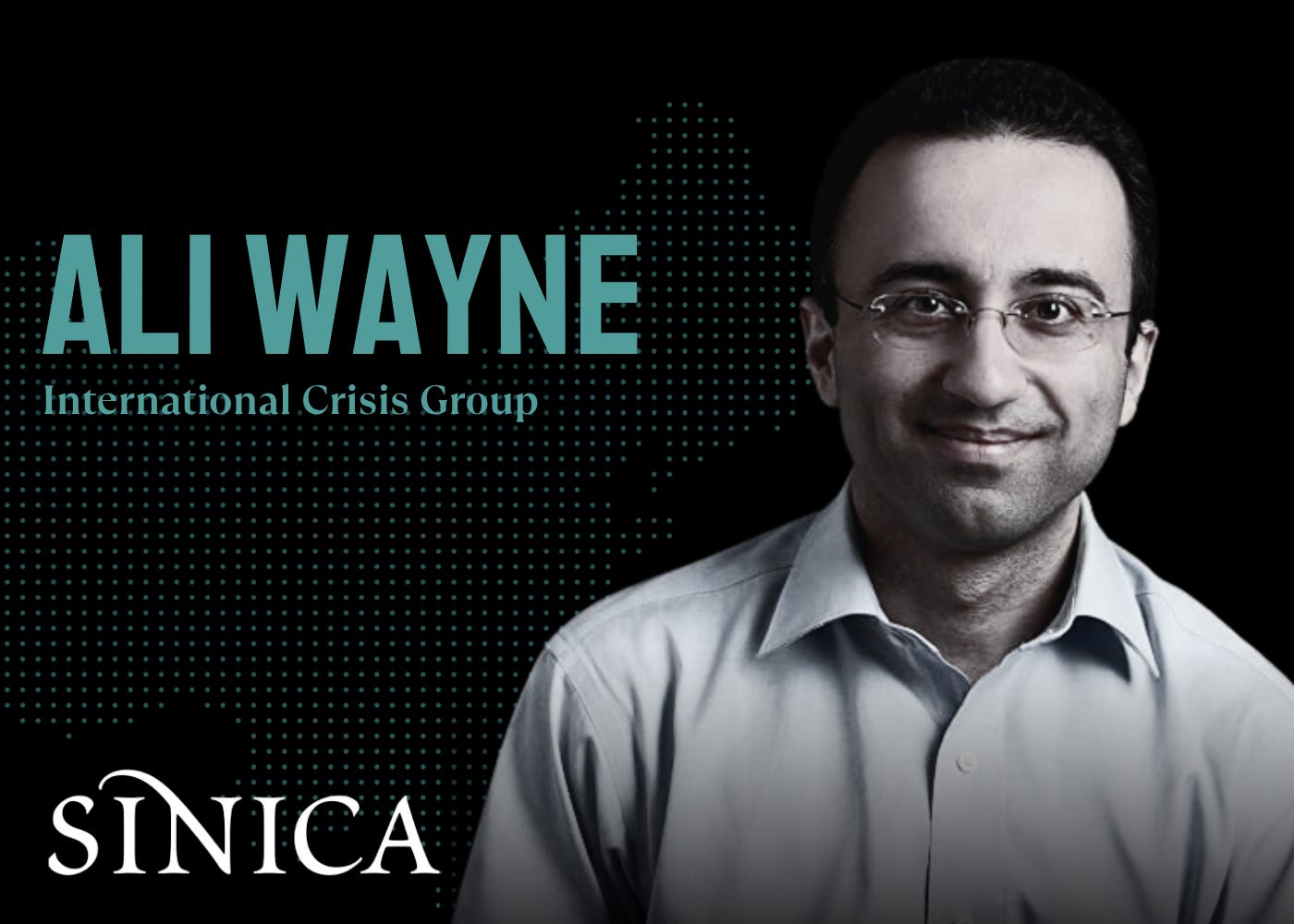
This week on Sinica, I chat with Ali Wyne, Senior Research and Advocacy Adviser for U.S.-China at the International Crisis Group, just hours after President Trump’s plane left Chinese airspace at the end of a three-day state visit to Beijing. We dig into the new framework Xi Jinping put on the table — what Beijing is calling 中美建设性战略稳定关系, a “constructive China-U.S. relationship of strategic stability” — and ask whether it’s a genuine doctrine of mutual restraint or a rhetorical tripwire that future American moves can be characterized as having violated. Ali and I work through Foreign Minister Wang Yi’s morning-after media briefing, including his striking claim that the U.S. side now “does not accept” Taiwan independence — a notable shift from the standard American formulation. We talk about what Trump actually said on Taiwan in his Air Force One press gaggle and in his Fox News interview with Bret Baier, the gap between Trump’s account of Xi’s private remarks on Iran and what Beijing is willing to say publicly, and whether AI can serve as a durable basis for cooperation coming out of the summit. We also turn to the American domestic side: the bind Democrats find themselves in trying to critique Trump’s China engagement without out-hawking him, the generational data showing a striking gap in American attitudes toward China that transcends partisan division, and the question of when that shift in mass opinion actually starts to bite on policy.
3:46 — Big-picture takeaways: Trump’s stumble into a more sober appreciation of Chinese power
6:24 — The new Chinese framing: “constructive strategic stability” and what Beijing wants from it
10:21 — Unpacking the framework: Wu Xinbo, Sun Chenghao, and the nuclear-arms-control genealogy
14:52 — Doctrine of mutual restraint or rhetorical tripwire? The two readings circulating among China-watchers
18:04 — The Democrats’ hawkish trap: what a non-out-hawking critique of Trump on China would actually sound like
23:50 — Who in the Democratic political class is modeling the right posture
28:38 — The generational gap in American attitudes toward China, and why it transcends partisan divisions
33:32 — When the public-opinion shift starts to bite on policy formation
37:16 — Taiwan: Xi’s fire-and-water language, Rubio’s “raise, note, move on,” and what Trump said to Bret Baier
42:47 — Wang Yi’s “does not accept” formulation and the marker Beijing is laying down
47:32 — Iran and Hormuz: the gap between what Trump says Xi told him privately and what Beijing will say publicly
51:57 — Closing: where Ali ends the week, and the case for Chinese strategic patience 55:18 — Recommended reading on the summit: Ryan Hass in The Atlantic and Jessica Chen Weiss in the FT
Paying It Forward
Afra Wang, author of the Concurrent newsletter — one of the most thoughtful writers on Chinese technological development and what it tells us about broader socioeconomic shifts in China
Allie Matthias, senior research assistant at Brookings, for her recent essay with Jonathan Czin in China Leadership Monitor on the inversion of the “peak China” thesis
Mackenzie Miller, program manager of the Penn Project on the Future of U.S.-China Relations
Kate Gross-Whitaker, research and editorial associate at the Institute for America, China, and the Future of Global Affairs (ACF)
Recommendations
Ali:
No Straight Road Takes You There: Essays for Uneven Terrain by Rebecca Solnit
A World Appears: A Journey into Consciousness by Michael Pollan
Living in the Present with John Prine by Tom Piazza
Kaiser:
One Day, Everyone Will Have Always Been Against This by Omar El Akkad — a National Book Award–winning cri de coeur from a brilliant writer, in the same unflinching register as Ta-Nehisi Coates’s Between the World and Me


