



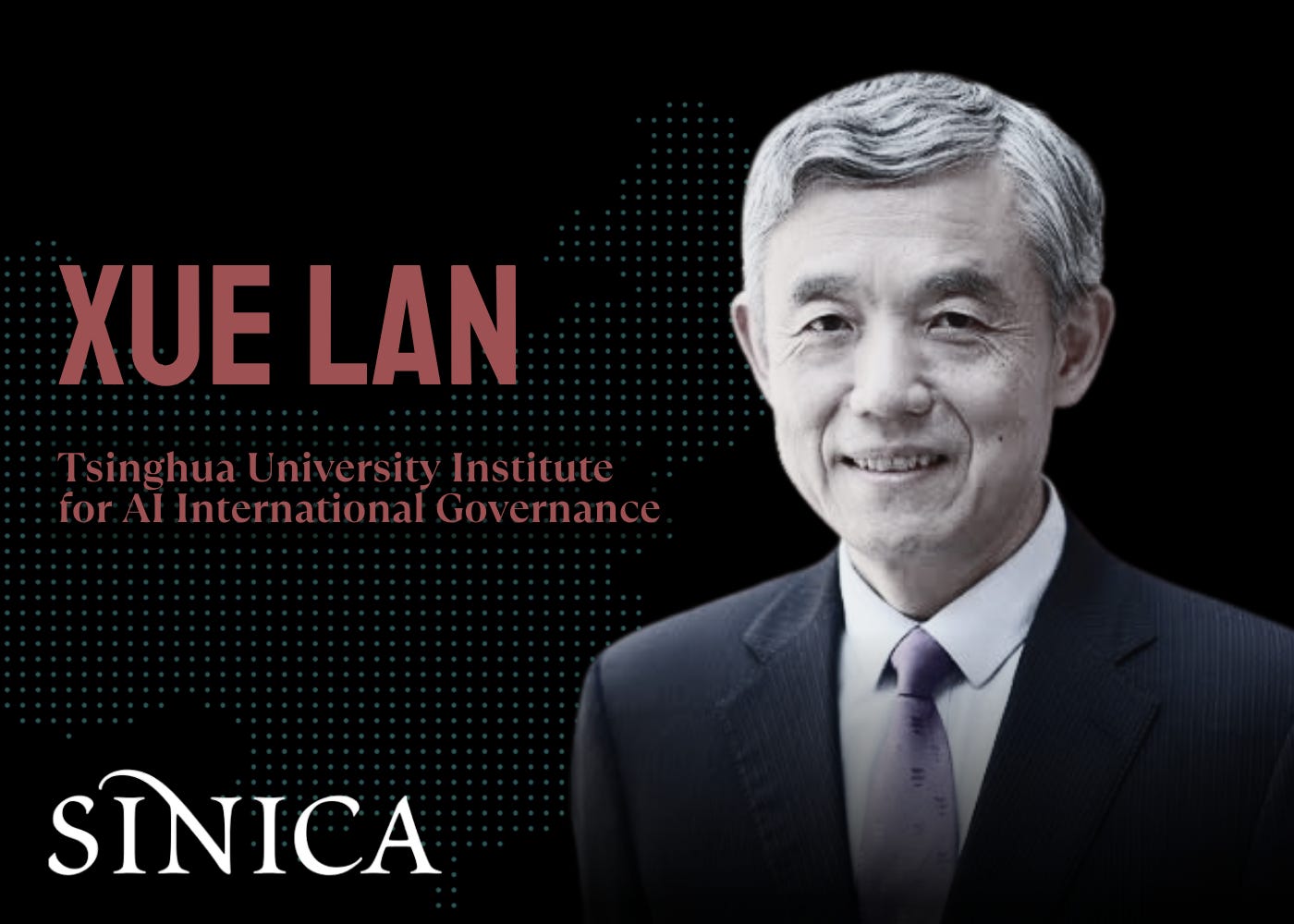
Recorded live from the Davos on Air booth at the World Economic Forum's Annual Meeting of the New Champions in Dalian, this special episode of Sinica tackles the "pacing problem": the widening gap between how fast AI moves and how slowly regulation can catch up. I sit down with Xue Lan, dean of Schwarzman College at Tsinghua University and one of the architects of China's concept of "agile governance," to unpack what that term means in practice. He traces China's regulatory evolution from the 2017 AI plan through the generative AI rules and the 2021 tech crackdown, compare Chinese, American, and European approaches, and ask whether Beijing's adaptive style can travel to other political systems — including liberal democracies.
00:09 – Live from Dalian: the “pacing problem” and why AI has turned it into a chasm
03:18 – Introducing Xue Lan, dean of Schwarzman College and architect of “agile governance”
04:34 – Why AI’s pace makes it uniquely hard to regulate
06:01 – Defining agile governance: mindset, partnership over adversary, and light-touch tools
11:54 – From the 2017 AI plan to today: China’s two-track approach to tech and governance
20:07 – Balancing development and security amid the US-China AI race
23:24 – Revisiting the 2021 tech crackdown: failure of the model, or agility of a different kind?
26:14 – The “DeepSeek moment,” open-weight models, and regulatory uncertainty by design
37:10 – EU comprehensiveness vs. US patchwork vs. China’s modular, adaptive approach
46:59 – Can agile governance travel to liberal democracies? Finding common ground on global AI risk


