


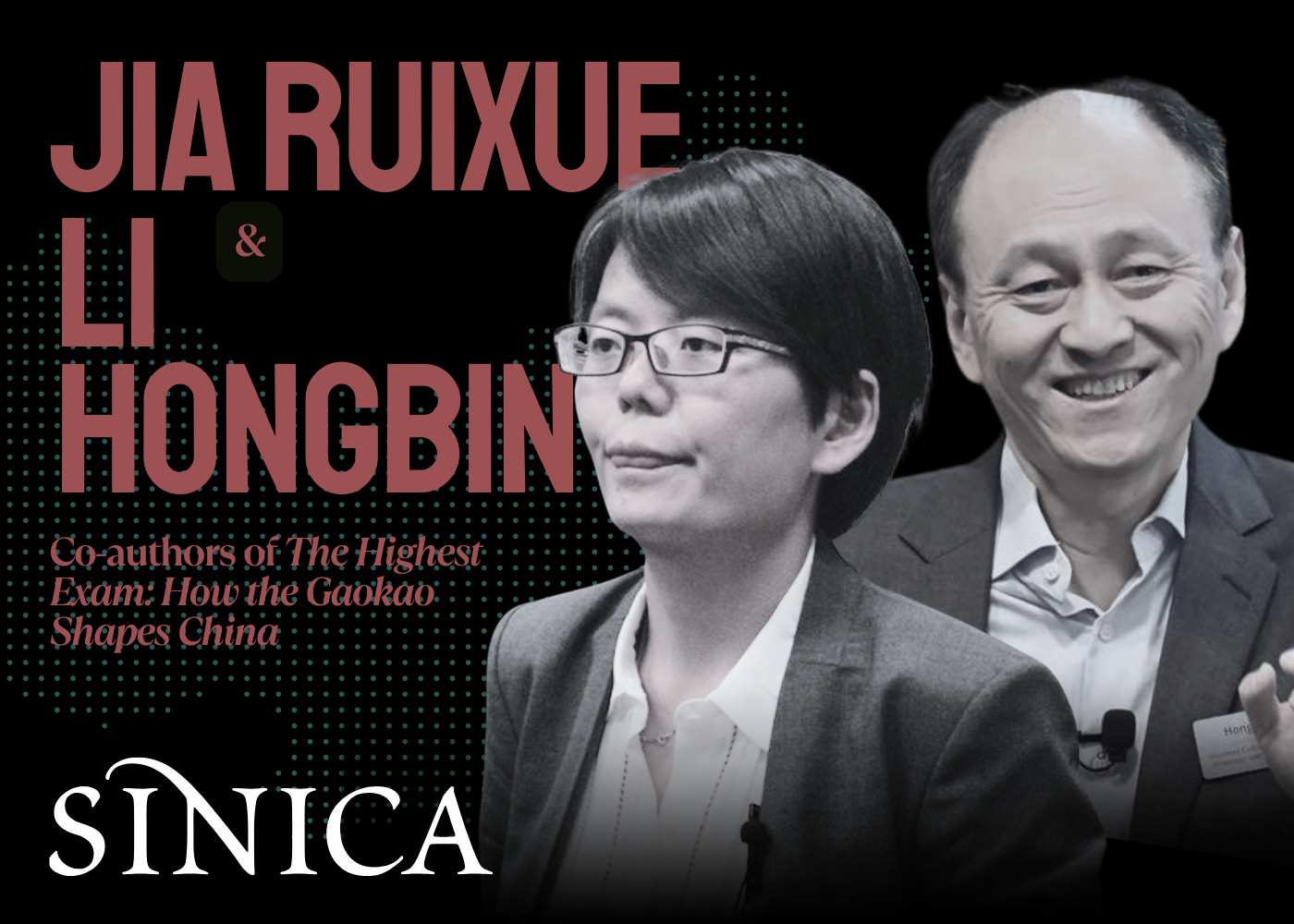
This week on Sinica, I speak with Jia Ruixue and Li Hongbin, coauthors of The Highest Exam: How the Gaokao Shapes China. We’re talking about China’s college entrance exam — dreaded and feared, with outsized ability to determine life outcomes, seen as deeply flawed yet also sacrosanct, something few Chinese want drastically altered or removed. Cards on table: I had very strong preconceptions about the gaokao. My wife and I planned our children’s education to get them out of the Chinese system before it became increasingly oriented toward gaokao preparation. But this book really opened my eyes.
Ruixue is professor of economics at UC San Diego’s School of Global Policy and Strategy, researching how institutions like examination systems shape governance, elite selection, and state capacity. Hongbin is James Liang Chair at Stanford, focusing on education, labor markets, and institutional foundations of China’s economic development.
We explore why the gaokao represents far more than just a difficult test, the concrete incentives families face, why there are limited alternative routes for social mobility, how both authors’ own experiences shaped their thinking, why exam-based elite selection has been so durable in China, what happened when the exam system was suspended during the Cultural Revolution, why inequality has increased despite internet access to materials, why meaningful reform is so politically difficult, how education translated into productivity and GDP growth, the gap between skill formation and economic returns, how the system shapes governance and everyday life, and the moral dimensions of exam culture when Chinese families migrate to very different education systems like the U.S.
6:18 – What the gaokao actually represents beyond just being a difficult exam
11:54 – Why there are limited alternative pathways for social mobility
14:23 – How their own experiences as students shaped their thinking
18:46 – Why the gaokao is a political institution, not just educational policy
22:21 – Why exam-based elite selection has been so durable in China
28:30 – What happened in late Qing and Cultural Revolution when exams were suspended
33:26 – Has internet access to materials reduced inequality or has it persisted?
36:55 – Hongbin’s direct experience trying to reform the gaokao—and why it failed
40:28 – How education improvement accounts for significant share of China’s GDP growth
42:44 – The gap: college doesn’t add measurable skills, but gaokao scores predict income
46:56 – How centralized approach affects talent allocation across fields
51:08 – The gaokao and GDP tournament for officials: similar tournament systems
54:26 – How ranking and evaluation systems shape workplace behavior and culture
58:12 – When exam culture meets U.S. education: understanding tensions around affirmative action
1:02:10 – Transparent rule-based evaluation vs. discretion and judgment: the fundamental tradeoff
Recommendations:
Ruixue: Piao Liang Peng You (film by Geng Jun); Stoner (a novel by John Williams)
Hongbin: The Dictator’s Handbook
Kaiser: Furious Minds: The Making of the MAGA New Right by Laura K. Field; Black Pill by Elle Reeve


