




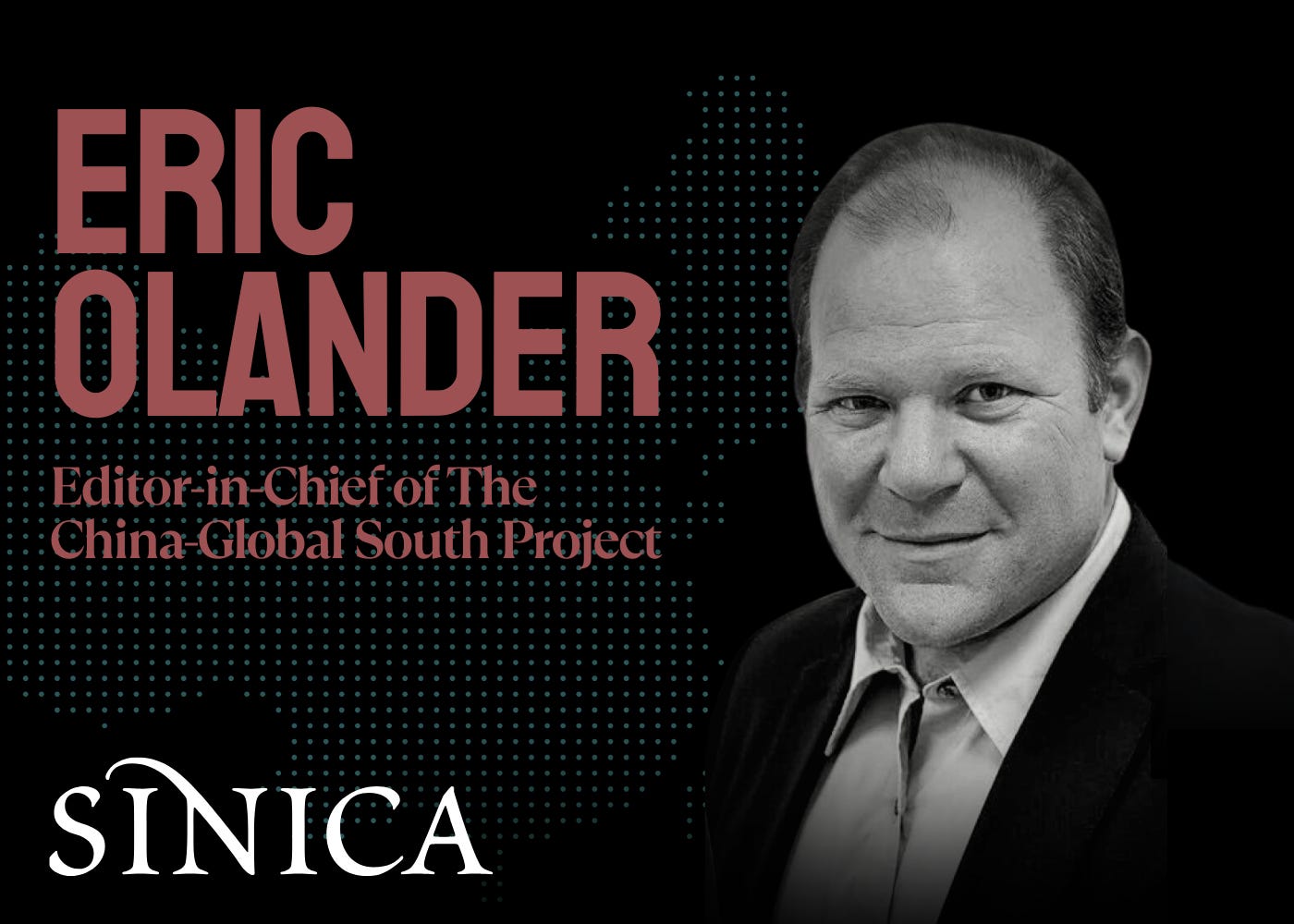
This week on Sinica, in a joint episode with the China-Global South Podcast, I speak with Eric Olander, host of the China Global South Podcast and founder/editor-in-chief of the China-Global South Project.
In the early hours of January 3rd, U.S. forces carried out a coordinated operation in Venezuela that resulted in the capture of President Nicolás Maduro and his wife, followed by their rendition to the United States to face drug trafficking charges. The operation unfolded quickly, with minimal kinetic escalation, but has raised far-reaching questions about international law, hemispheric security, and the Trump administration’s willingness to use force in the Western Hemisphere. Just before the raid, China’s Special Envoy for Latin America, Qiu Xiaoqi, had met with Maduro in Caracas. Commentary linking Trump’s action to China has ranged widely—claims about spheres of influence, arguments this was all about oil or rare earths, and pronouncements about what this means for Taiwan. Eric helps us think through China’s actual stake in Venezuela, how deeply Beijing understands Latin America, what this episode does and does not change about China’s role in the region and the global South more broadly, China’s immediate reaction and concrete exposure on the ground, how it manages political risk when partner regimes collapse, and what Chinese military planners may be studying as they assess how this operation unfolded.
5:18 – How Beijing is reading this episode: official messaging versus elite thinking
7:40 – The Taiwan comparisons on Chinese social media and why they don’t work
11:09 – How deep is China’s actual expertise on Latin America?
14:56 – Comparing U.S. and Chinese benches of Latin America expertise
18:02 – Are we back to spheres of influence? Why that framing doesn’t work
20:09 – Where is China most exposed in Venezuela: oil, loans, personnel?
23:41 – The resource-for-infrastructure model and why it failed
28:27 – The political assets: China as defender of sovereignty and multilateralism
36:25 – Will this push left-leaning governments closer to Beijing?
40:07 – The “China impotence” narrative and what doing something would actually mean
46:26 – What Chinese military planners are actually studying
51:46 – The Qiu Xiaoqi meeting: strategic failure or intelligence delivery?
58:40 – What actually changes and what doesn’t: looking ahead
Paying it forward: Alonso Illueca, nonresident fellow for Latin America and the Caribbean at the China Global South Project
Recommendations:
Eric: “China’s Long Economic War“ by Zongyuan Zoe Liu (Foreign Affairs)
Kaiser: The Venetian Heretic by Christian Cameron


