


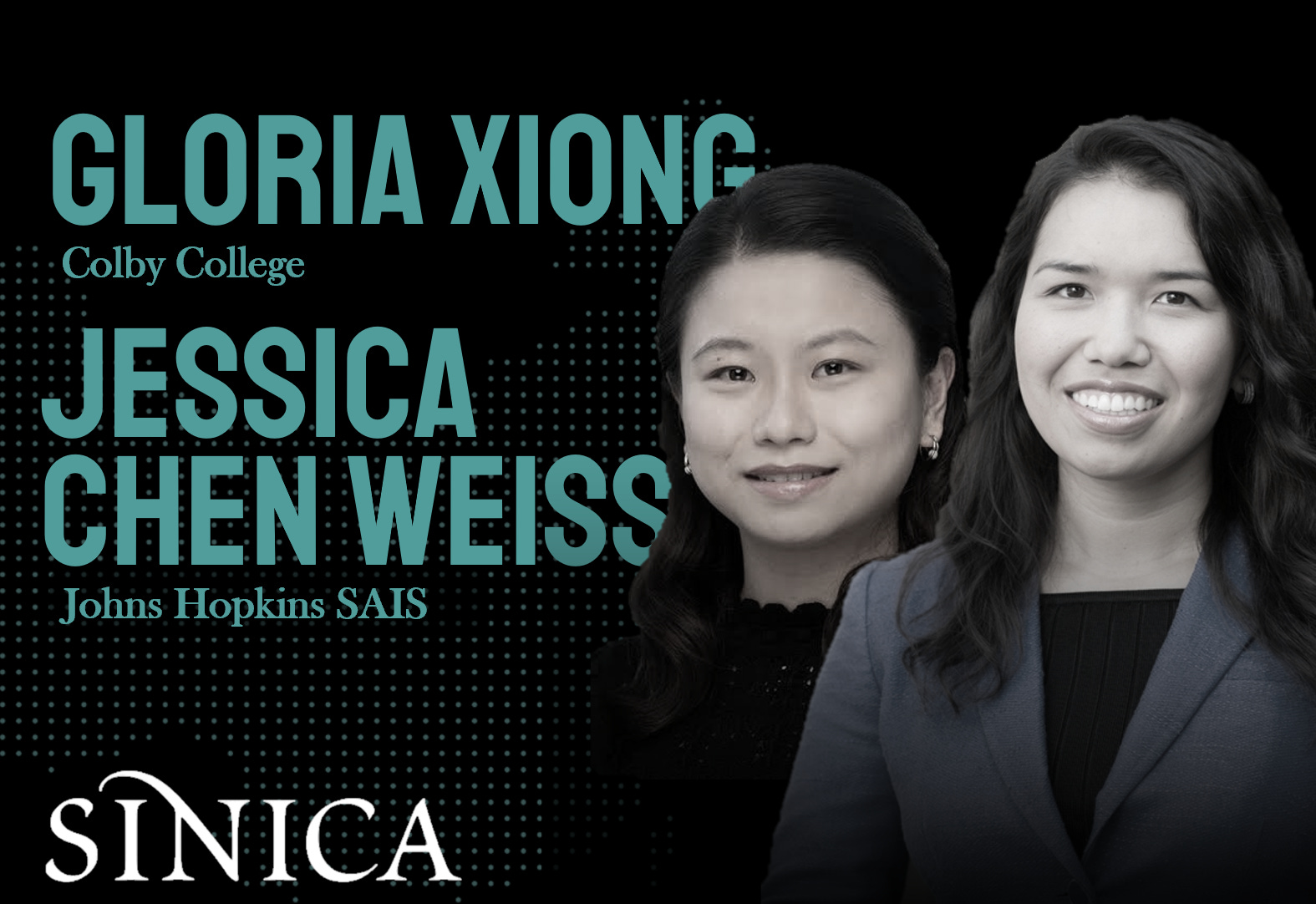
This week I sat down with Gloria Xiong, Assistant Professor of Government at Colby College, and Jessica Chen Weiss, the David M. Lampton Professor of China Studies at Johns Hopkins SAIS, to discuss their new Foreign Affairs essay, “How China Found Its Most Potent Weapon: The Real History of Beijing’s Rare Earth Dominance.”
The story everyone tells is one of foresight — a master plan hatched by Deng Xiaoping and now coming to fruition. Gloria and Jessica argue the reality was far messier: reform-era export mania, environmental catastrophe, defiant local governments, scarcity anxiety, and a lesson in chokepoint weaponization that Beijing learned from Washington. Getting the story wrong, they argue, feeds an action-reaction spiral that neither side started and neither fully controls — and with the Busan truce expiring in November, the stakes could hardly be higher.
09:31 — “The Middle East has oil, China has rare earths”: what Deng Xiaoping actually said, and how a quote got recruited for a story he wasn’t telling
12:33 — Why the master plan narrative is so irresistible across the partisan spectrum in Washington
15:40 — The cheap and dirty origins: reform-era export mania, thousands of small mines, and rare earths sold “at the price of cabbage and dirt”
19:06 — The West as co-author of the chokepoint: offshoring the pollution, and the stockpile that was never built
21:53 — Beijing’s struggle to control its own industry: quotas, “crime rings,” and the partially failed 2002 consolidation
25:13 — September 2010: what really happened with the “embargo” against Japan, and why Beijing may have learned about it from Japanese customs
28:47 — Fans and fire hoses: how bottom-up nationalism can commit Beijing to coercive postures it didn’t choose
32:13 — The debate inside China after 2010: protectionists versus Hong Feng’s warning against using rare earths as “political chips”
35:44 — The 2015 WTO ruling: China complied — was it a rule-taker, or did it simply lack the tools to do anything else?
38:06 — Learning from Washington: Huawei, the Export Control Law, the China Rare Earth Group, and what distinguishes learning from planning
40:24 — The 2022–2024 ledger: what’s the evidence for an action-reaction spiral beyond the timeline?
44:25 — April 2025: coercion or bureaucratic pileup? Thirty licensing officials and a 74% collapse in magnet exports
47:46 — October 2025: the extraterritorial rule that mirrored the Foreign Direct Product Rule, and the Busan truce
52:32 — The countdown to November: hawks in both capitals, “mutually assured disruption,” and Xi’s coming state visit
55:29 — The limits of leverage on both sides: yttrium, Japan’s diversification, and China’s own resource insecurity
58:32 — From crime rings to two national champions: has the Wild West been tamed, and are central-local relations “fractured”?
01:02:21 — Prescriptions: positive reciprocity, licensing Chinese technology, and managing interdependence rather than escaping it
01:05:51 — Everyone else: Myanmar, Congo, Australia, and how Beijing thinks about third countries that don’t want to choose
Paying It Forward
Gloria name-checked Wendy Leutert of Indiana University, who works on the reform and global expansion of China’s state-owned enterprises and, with Isaac Kardon, on Chinese investment in global ports; Ning Leng of Georgetown University, author of the award-winning Politicizing Business: How Firms Are Made to Serve the Party State in China; and Ketian Zhang, who has written extensively on Chinese coercion and maritime disputes.
Jessica first acknowledged the scholars whose research the essay drew on but couldn’t cite in Foreign Affairs: Cory Combs of Trivium China, Arthur Kroeber, Henry Farrell, Duleep Singh, and Julie Klinger. She also flagged Jack Zhang, who runs the Trade War Lab at the University of Kansas, and Kyle Jaros and Sara Newland, who are writing a book on subnational economic statecraft — work that has shaped her thinking on disaggregating what the United States wants, not just what China wants.
Recommendations
Gloria: Healing the Heart of Democracy by Parker Palmer — a book she first read in a college writing seminar and returned to as she heads back into the classroom.
Jessica: The Scientist and the Spy by Mara Hvistendahl, which she uses to close her SAIS seminar on Chinese foreign policy as a reminder about proportionality; and Ann Patchett’s new novel Whistler.
Kaiser: Wallace Stegner’s Angle of Repose, the 1972 Pulitzer winner — a novel about mining camps in the American West and one of the most fully realized characters in American fiction.
Also mentioned: Jessica’s recent interview with Daniel Kurtz-Phelan on The Foreign Affairs Interview podcast, and her interview in The Monitor, the newsletter of the Carter Center’s U.S.-China Perception Monitor.


