


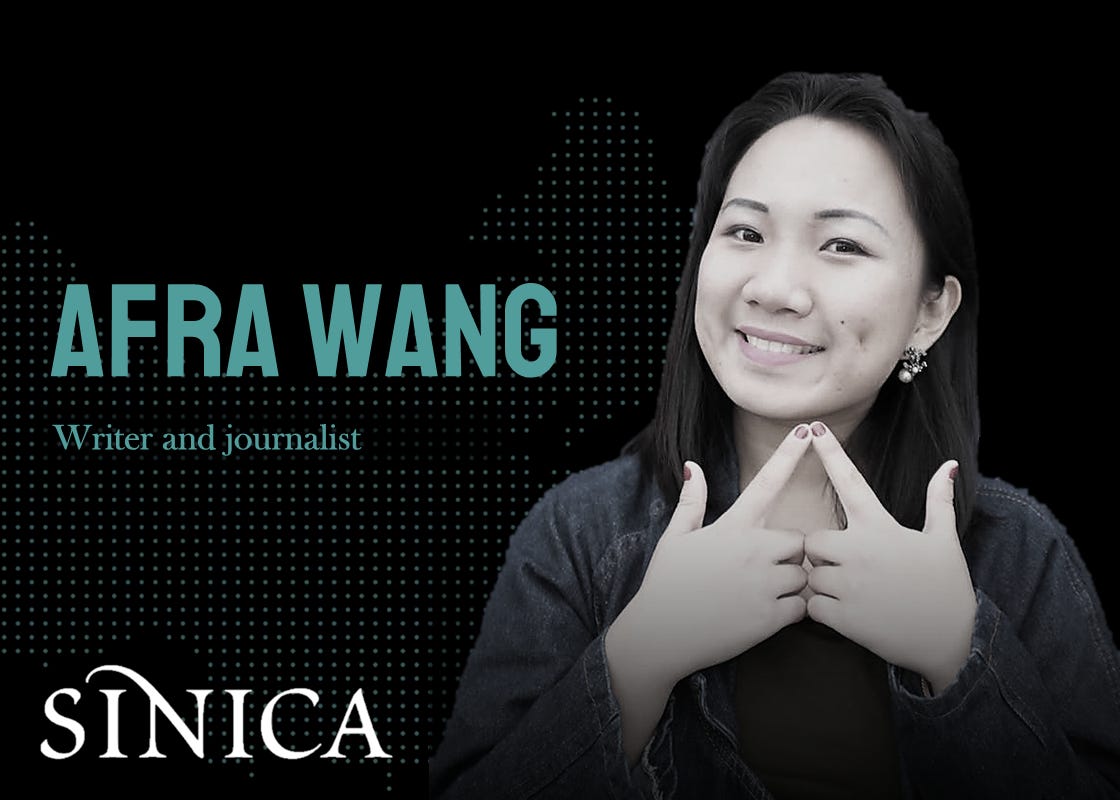
This week on Sinica, I’m joined again by Afra Wang, the Bay Area-based writer behind the AI newsletter Concurrent, who was last on the show in January to talk about her Wired piece on The Morning Star of Lingao and China’s “Industrial Party.” She’s back with two new pieces of on-the-ground reportage that get beneath the surface of China’s apparent AI techno-optimism: her New Yorker Lede piece on Liangzhu, the town outside Hangzhou where laid-off and burnt-out tech workers have gone to vibe code in each other’s living rooms (and where AI and BaZi fortune-telling have become strangely intimate), and a forthcoming New York Magazine piece on China’s sprawling, lucrative, and largely unregulated “learn AI, get rich” education industry. We talk about why 93% of Chinese respondents tell Gallup that AI will mostly help their country, what that number conceals, and whether what looks like optimism is sometimes closer to acceptance.
Afra’s pieces discussed in this episode:
What China’s Vibe-Coding Capital Can Tell Us About the A.I. Boom — The New Yorker, September 23, 2026
[Her forthcoming New York Magazine piece on China’s AI education industry — [LINK TK, expected after October 12]]
You’ve Never Heard of China’s Greatest Sci-Fi Novel — Wired, January 2026, and our January 2026 Sinica conversation about it
Subscribe to Afra’s newsletter, Concurrent
Also mentioned:
Optimism About AI Globally Widespread Despite Uneven Adoption — the Microsoft-Gallup survey
China’s OpenClaw gold rush — MIT Technology Review
Damien Ma and William Adams, In Line Behind a Billion People: How Scarcity Will Define China’s Ascent in the Next Decade
Evan Osnos, Crazy English — The New Yorker, April 2008
Lian Si 廉思, Journey Without a Map 无图之旅:一代青年的自我寻路
Ken Liu on Chinese science fiction — Sinica, 2016
06:51 – Walking into Liangzhu’s living rooms: the San Francisco déjà vu, and the grimness beneath the techno-optimist story the West wants to hear
10:14 – Setting the scene: a real-estate developer’s utopian village, Neolithic ruins, Xi Jinping’s intervention, and a “road-to-food ratio” low enough to build real community
17:30 – Child of the layoffs or child of DeepSeek? The post-COVID “ego death” of Chinese tech — and a quibble about the word “crackdown”
21:42 – Master Qi and the living room as a social form: what Liangzhu offers that a Beijing office or a WeChat group can’t
24:11 – What the 93% really tells us: optimism, acceptance, or FOMO when you can’t protest a data center
29:26 – “Westerners get restless when they can’t protest; Chinese people get restless when they haven’t found a teacher”: qiúzhī 求知, meritocracy as religion, and the company called Shēngcái Yǒudào 生财有道
32:48 – Inside Shengcai Youdao: the “prosperity evangelist” conference room, the ladder from ordinary member to CEO class, Mr. Tree’s Hilton seminars, and who’s actually paying 3,000 yuan a year
37:44 – Scam or ladder? The state’s war on the “paid knowledge” mess, Dragon Ball referral credits, and the security guard running Claude Code on his phone during his shift
41:03 – How it compares to the Valley’s course-sellers; selling hope and upward mobility, echoes of Crazy English, and “the prosperity gospel with Chinese characteristics”
45:30 – “Take us to Silicon Valley!”: what the West means to a room of one-person companies building apps for the U.S. App Store
47:18 – Xiao Kai, the 25-year-old AI filmmaker from Heilongjiang: murder mysteries as model-friendly plots, government commissions, WaytoAGI, and the local-government AIGC fever
55:28 – Lian Si’s Journey Without a Map: a Party insider tells young people to “make peace with the ordinary” while everyone else says learn AI or be left behind
59:59 – FateTell and the gray zone of AI fortune-telling: tarot slot machines in Shenzhen, crystal shops, and Liangzhu as “China’s Sedona”
1:04:13 – Levy, the BaZi cosmology, Sam Altman’s chart, and Kaiser plays the skeptic: the Yijing as “humanity’s first statistical decision model,” the Whole Earth Catalog, and New Age re-imported from the West
1:12:27 – Do they actually believe it? Speech fasting, BaZi compatibility in hiring, and Chinese syncretism at work
1:14:45 – When the local government falls in love with the scene: Crazy Thursday, incubators, “new quality productive forces,” and why Liangzhu’s peak may already be over
1:19:42 – Are Chinese people really cavalier about AI safety? Pragmatism, scarce compute, trust in state capacity, the blind spots of EA — and a preview of Afra’s third piece on China’s “industrial AI slop”
Paying It Forward:
Zilan Qian, a GovAI fellow researching AI governance in China who writes the Substack Until Zilan Finds a Better Name and is a must-read on how AI-safety concepts like “loss of control” translate (or don’t) into the Chinese context. Her most widely shared piece: Why America Builds AI Girlfriends and China Makes AI Boyfriends.
Recommendations:
Afra: Ken Liu’s new collection, The Passing of the Dragon and Other Stories, whose title borrows a metaphor from Ursula K. Le Guin.
Kaiser: Marilynne Robinson’s Home, the second of the four Gilead novels — set in the same few weeks of 1956 as Gilead but seen from inside the Boughton household, as Glory and her prodigal brother Jack circle a secret the book doesn’t name until nearly the end.


